Fremont operates as the Bay Area’s quiet achiever, a city of 228,192[1] that quietly checks boxes other metros struggle to deliver: top-rated schools, median household income of $176,350[2], major employers within commuting distance, and genuine transit options through BART and ACE rail[3][4]. This isn’t San Francisco’s urban intensity or Silicon Valley’s tech monoculture. Fremont offers something more balanced for living in California: suburban comfort with Bay Area access, an innovation economy without startup chaos, and family-friendly infrastructure at prices that, while expensive by national standards, provide value relative to neighboring communities.
The financial equation requires immediate attention because it defines whether Fremont makes sense for your situation. Median home values sit around $1.48M[5], which is eye-watering by most American standards, yet firmly in “premium Bay Area suburb” territory. Rent averages $2,989-$3,120[6][7] depending on unit size and is expensive but not catastrophic for dual-income professionals in tech or biotech. The critical question isn’t whether Fremont is cheap—it absolutely isn’t—but whether the combination of schools, safety, transit access, and employment proximity justifies the premium for your household’s specific situation.
But Fremont delivers substance alongside its price tag. The city formed in 1956 when five distinct townships—Mission San Jose, Centerville, Niles, Irvington, and Warm Springs—unified[8], creating neighborhood diversity rare in master-planned suburbs. Mission San Jose offers historic California charm and schools ranked among the state’s best. Niles preserves early film industry heritage with antique shops and small-town character. Warm Springs positions tech workers steps from major employers, including Tesla’s massive manufacturing plant. This variety means families can find their fit rather than accepting one-size-fits-all development.
The transit connectivity amplifies Fremont’s value beyond just housing. BART’s Warm Springs / South Fremont Station[3] connects to Silicon Valley and San Francisco, making car-free commutes realistic for some residents. ACE commuter rail[4] runs weekday service between Stockton and San Jose with a Fremont stop, creating options for those working Peninsula or South Bay jobs. The Capitol Corridor Amtrak[9] adds Sacramento connectivity. The 31.1-minute average commute[10] reflects these transit advantages: reasonable for Bay Area standards, where many spend 60+ minutes crawling on freeways.
Yet Fremont demands realistic expectations alongside its advantages. The cost of living exceeds national averages substantially; this remains expensive for most American budgets despite being “relative value” within the Bay Area context. The city lacks walkable urban density or nightlife culture, operating more as a suburb than true city. School quality, while strong overall, varies by specific campus, requiring family research. The weather runs warmer and sunnier than San Francisco, but foggier and cooler than inland valleys; a compromise climate that satisfies some and disappoints others expecting California sunshine stereotypes. This guide will walk you through everything you need to know to determine whether Fremont’s premium Bay Area suburban lifestyle aligns with your priorities, budget, and vision for Silicon Valley living.
Quick Snapshot of Living in Fremont
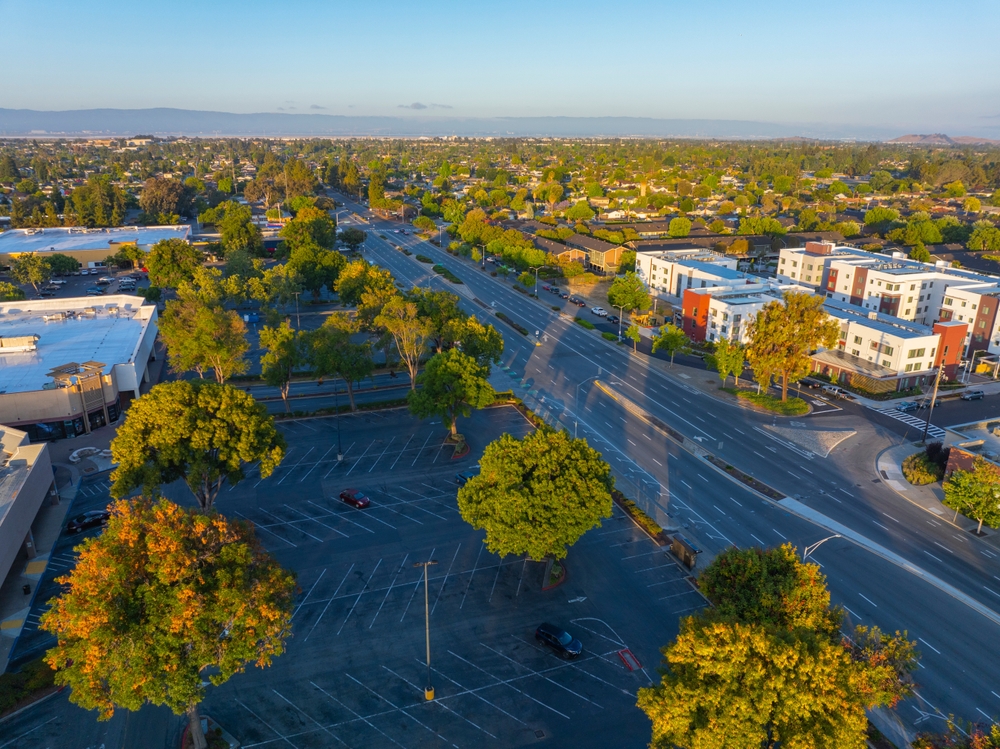
Fremont is one of those Bay Area cities that quietly checks a lot of boxes: strong schools, high household incomes, big employers nearby, and solid transit options (BART + rail). The tradeoff is predictable: housing and daily costs are high, but for many families and professionals, Fremont is a “worth it” city if the budget can support it.
Population: 228,192 (July 1, 2024 estimate)[1]
Median Household Income: $176,350 (2019–2023)[2]
Median Home Value: ~$1,484,516[5]
Median Rent: ~$2,989–$3,120/month[6][7]
Average Commute: ~31.1 minutes[10]
Vibe: Suburban, family-oriented, tech-adjacent, transit-connected
Cost of Living in Fremont
Housing Costs
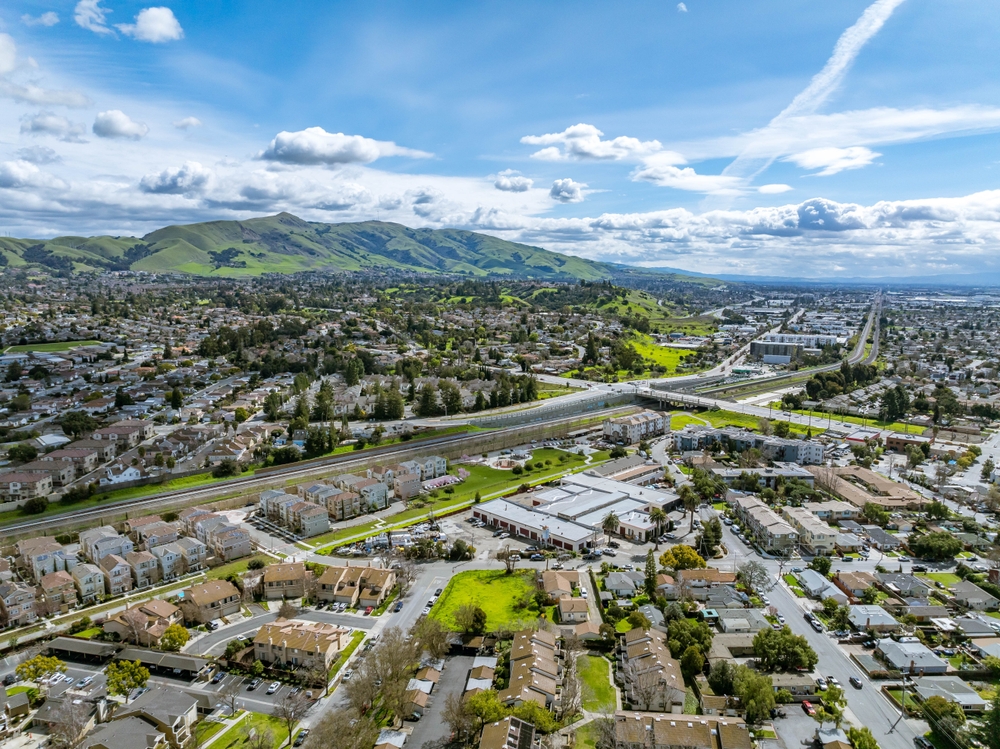
For most movers, Fremont’s housing market is the headline, both because it’s expensive and because it’s a big reason people choose the city (schools, safety perceptions, location).
- Buying: Typical home value sits at $1,484,516[5] (Zillow Home Value Index), with homes going pending in about 22 days. Fremont is priced like a premium Bay Area suburb.
- Renting: Average rent ranges from $2,989–$3,120[6][7], with studio (~$1,950), 1BR (~$2,292), 2BR (~$2,900), 3BR (~$3,869), and 4BR (~$5,050)[7] showing wide variation.
If you’re budget-sensitive, focus your search by commute first (which BART/ACE station you’d use), then compare rents within that “commute bubble.”
Utilities
Fremont is served by Alameda County Water District (ACWD)[11], which lists consumption charges at $5.17 per unit (one unit = 100 cubic feet or 748 gallons) for typical customers, plus service charges. ACWD approved 4% rate increases effective March 1, 2025 and 2026.
Most Fremont households receive electricity and natural gas from PG&E[12][13], which publishes rate plans and pricing documents. PG&E issued a press release noting natural gas rates decreased on Jan 1, 2026.
Trash and recycling service is commonly handled through Republic Services[14], which maintains a Fremont municipality page with customer service information.
Gas & Transportation for Living in Fremont
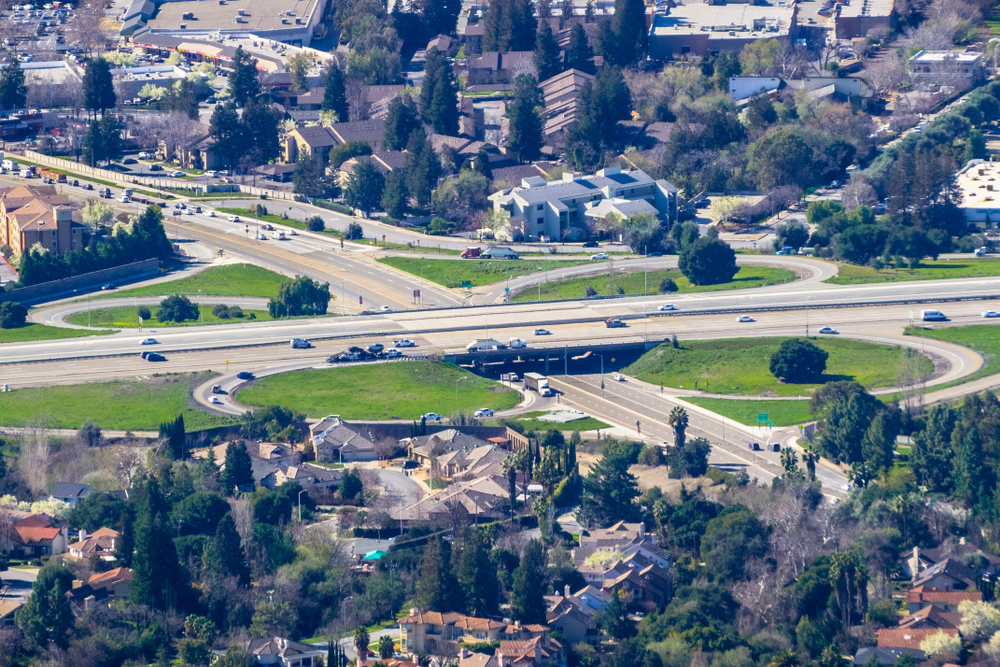
Gas prices remain a significant California expense. AAA’s tracker[15] shows the California average at $4.210 (as of time of data pull). Local prices vary by station, but AAA provides a reliable baseline for monthly budgeting.
Groceries & Everyday Costs
Fremont is a high-income Bay Area market, which often correlates with higher costs for services and dining. Your grocery total will hinge on household size, diet, and how often you eat out. Price-check a “standard cart” (milk, eggs, chicken, rice, produce, coffee) at two stores near neighborhoods you’re targeting for a personal baseline.
Lifestyle & Quality of Life
Traffic & Commute
Fremont’s commute experience depends heavily on whether you’re traveling locally within the East Bay, up the Peninsula, or toward Silicon Valley. The Census lists Fremont’s mean travel time to work at 31.1 minutes[10]. That reflects what people actually experience across a range of commute types: Fremont is very much a commuter city.
Transit & Regional Connectivity
Fremont has major BART access, including Warm Springs / South Fremont Station[3], the southernmost station in Alameda County, located in Fremont’s Warm Springs Innovation District. ACE rail[4] positions itself as weekday round-trips with 10 stops between Stockton and San Jose, including Fremont’s Centerville Depot.
The Fremont/Centerville station is also part of the Capitol Corridor network[9], with practical details including parking info for commuters. AC Transit[16] provides bus service across the East Bay with maps and schedules.
Plain-English takeaway: Fremont gives you multiple “car-light” commute options, which can help offset both traffic stress and fuel costs.
Living in Fremont: Neighborhoods & Areas to Know
Fremont is essentially a collection of five distinct historic districts that unified in 1956[8], creating neighborhood variety rare in Bay Area suburbs.
Mission San Jose
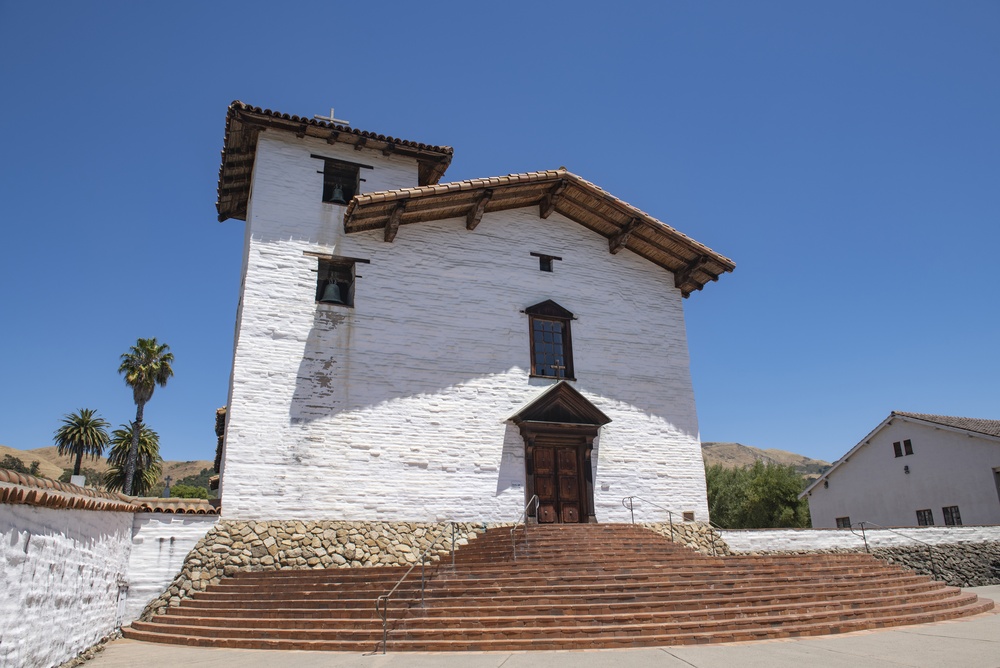
Mission San Jose represents Fremont’s most prestigious and education-focused neighborhood, centered around the historic Mission San Jose founded in 1797[17] and anchored by Mission San Jose High School, which is consistently ranked among California’s top public high schools[18]. The neighborhood attracts families prioritizing education above nearly all other factors, creating a community where academic achievement drives property values and social dynamics. Home prices typically exceed $2M[19], reflecting the premium parents pay for access to elite public education.
The housing stock mixes spacious single-family homes ranging from modest bungalows to large custom estates, with many properties built in the mid-20th century featuring various architectural styles[17]. The neighborhood maintains small-town character with quaint shops, cafes, and restaurants along Mission Boulevard. Parks, including Old Mission Park and Mission San Jose Community Park, provide recreation space. The Mission San Jose Art & Wine Festival and other community events strengthen neighborhood identity.
The main trade-offs are cost (this is Fremont’s most expensive area) and an intense academic atmosphere that may not suit all families. The focus on education creates competitive environments that some children thrive in, while others find stressful. However, for families willing to prioritize and pay for elite public schooling, proximity to historic sites, and established community character, Mission San Jose delivers Fremont’s most refined suburban experience with educational credentials that justify the premium for many buyers.
Niles
Niles offers historic charm and bohemian character distinct from Fremont’s more conventional suburban neighborhoods. Located in the northwest corner, this district preserves its early film industry heritage: over 350 silent films were shot here, including Charlie Chaplin’s “The Tramp”[19]. The Niles Essanay Silent Film Museum celebrates this history, while antique shops, vintage boutiques, and local cafes create a walkable small-town atmosphere rare in the Bay Area.
The neighborhood hosts annual events, including the Spring Wildflower Festival, Garden Tour, and Niles Oktoberfest, that draw visitors and strengthen community bonds[19]. The architecture mixes unique homes with eclectic designs reflecting different eras, creating visual interest and character. Niles Community Park, Rancho Arroyo Park, California Nursery Historical Park, and Vallejo Mill Historical Park provide outdoor recreation[20]. Washington High School serves local students with a strong academic reputation.
Home prices in Niles typically run more accessible than Mission San Jose while maintaining desirability and charm. The neighborhood appeals to those appreciating artistic energy, historic preservation, and slower pace of life over cutting-edge amenities. Locals enjoy coffee from Devout Coffee and browse antique shops with genuine nostalgia rather than manufactured aesthetic. For buyers seeking authentic character, walkability, cultural activities, and a community that celebrates individuality rather than conformity, Niles delivers Fremont’s most distinctive neighborhood experience.
Warm Springs
Warm Springs exemplifies Fremont’s innovation economy positioning, offering proximity to major tech employers while maintaining residential character. Located in southern Fremont bordering Interstate 680, the neighborhood provides easy commutes to Silicon Valley employment centers. Tesla, Lam Research, Western Digital, and other major companies operate facilities within minutes of Warm Springs[21], making it ideal for tech professionals prioritizing short commutes.
The BART Warm Springs / South Fremont Station[3] provides direct rail connections to San Jose and San Francisco, expanding employment access beyond driving. Housing consists of diverse options from the 1960s-1990s[22], including single-family homes, townhouses, and apartments catering to various budgets and household types. Schools in Warm Springs earn high ratings, contributing to family appeal. Warm Springs Community Park covers 12 acres with baseball fields, basketball courts, and picnic areas[21].
The Pacific Commons shopping center provides extensive retail, dining, and entertainment within the neighborhood. Rancho Higuera Historical Park offers historic homes and walking trails. The area attracts young professionals working in tech, families seeking good schools and modern infrastructure, and commuters leveraging transit access. For those prioritizing proximity to innovation economy jobs, BART connectivity, and contemporary suburban living, Warm Springs delivers exactly that experience at prices more accessible than Mission San Jose while maintaining Fremont’s quality infrastructure.
Irvington
Irvington provides Fremont’s most walkable neighborhood[19] with a Walk Score of 78, offering urban character and ethnic diversity distinct from more homogeneous suburbs. The neighborhood centers around historic Irvington Plaza, once the town center of the historic Irvington district, now a popular gathering place hosting community events throughout the year[19]. The ethnically diverse population creates an authentic multicultural atmosphere reflected in restaurants, shops, and community dynamics.
Housing mixes ranch-style homes, multi-level contemporaries, and townhomes, providing options across price points. The neighborhood features several parks and open spaces, including Ardenwood Historic Farm and Ed R. Levin County Park. Schools receive strong ratings, though not quite matching Mission San Jose’s elite status. Central Park’s amenities sit nearby, while the location provides reasonable commutes to San Jose and Silicon Valley employment centers.
Irvington appeals to buyers seeking genuine diversity, walkable urban character, and community engagement over master-planned perfection. The historic preservation efforts maintain neighborhood identity and architectural interest. For families and professionals valuing authentic community, pedestrian-friendly streets, cultural diversity, and relative affordability within Fremont, Irvington offers practical suburban living with more character and walkability than typical Bay Area developments.
Centerville
Centerville encompasses a large area, including several sub-neighborhoods like Brookvale, Cabrillo, and Glenmoor[23], offering housing diversity and central location advantages. The district features shopping centers with local restaurants, parks, and access to the Amtrak station[23]. Centerville ranks as Fremont’s second most walkable neighborhood with a Walk Score of 69[23], providing pedestrian-friendly infrastructure for daily activities.
The housing stock mixes older properties built in the 1800s with newer construction, plus apartments, townhouses, and condos catering to various budgets and lifestyles[23]. Glenmoor within Centerville offers midcentury ranch-style homes and newer Mediterranean houses near Meyer Park and Fremont Hub shopping[22]. Brookvale features excellent schools, including Brookvale Elementary and American High, plus Alameda Creek Regional Trail and Quarry Lakes Regional Recreation Area[20].
Centerville attracts diverse residents like families seeking good schools and parks, young professionals wanting a central location, and buyers prioritizing housing variety and amenities. The area provides practical Fremont living with strong infrastructure, convenient shopping, transit access, and community resources at prices more accessible than premium districts. For those seeking balanced suburban living with neighborhood options and central positioning, Centerville delivers a versatile Fremont experience.
Living in Fremont: Schools & Education

For families, Fremont schools are a major draw. The California School Dashboard[24] provides a district summary for Fremont Unified, which also references the Dashboard for accountability reporting[25]. Fremont is not just a “good schools” city; it’s an “evaluate school-by-school” city. Even in strong districts, families should validate specific schools tied to an address.
Living in Fremont: Safety & Community
Fremont provides official resources for residents evaluating community safety. Fremont Police offers a crime statistics page[26] linking to weekly blotter information and community crime mapping tools. The department also publishes annual reports and yearly summaries[27] with data on calls for service and community programs. Choose neighborhoods you can realistically afford, then verify them using Fremont’s own tools for grounded information.
Living in Fremont: Weather & Climate

Fremont’s weather is often described as mild-to-warm with seasonal variation and generally comfortable conditions compared to many inland California cities. The location between San Francisco Bay and the East Bay hills creates a microclimate that’s warmer and sunnier than San Francisco but cooler than inland valleys. Summer temperatures typically reach the 70s and 80s, providing pleasant warmth without oppressive heat. The marine influence moderates temperatures while allowing more sunshine than coastal San Francisco experiences.
Winters remain mild with daytime temperatures generally in the 50s and 60s, with occasional cool nights. The region receives limited rainfall concentrated between November and March, with dry conditions dominating the rest of the year. Morning fog occasionally appears but typically burns off by midday, unlike San Francisco’s persistent marine layer. This climate pattern supports year-round outdoor activities—hiking Mission Peak, biking regional trails, enjoying parks—without seasonal constraints that affect other regions.
The National Weather Service provides Fremont-area forecasts[28] useful for understanding typical conditions. The lack of extreme weather means minimal heating and cooling costs, contributing to livability despite high housing prices. For those seeking California’s promised climate (warm without extreme heat, mild winters, and abundant sunshine), Fremont delivers a balanced Mediterranean pattern that satisfies most residents and supports the active outdoor lifestyle that partially justifies the Bay Area premium.
Work, Economy & Practical Living
Job Market & Employment
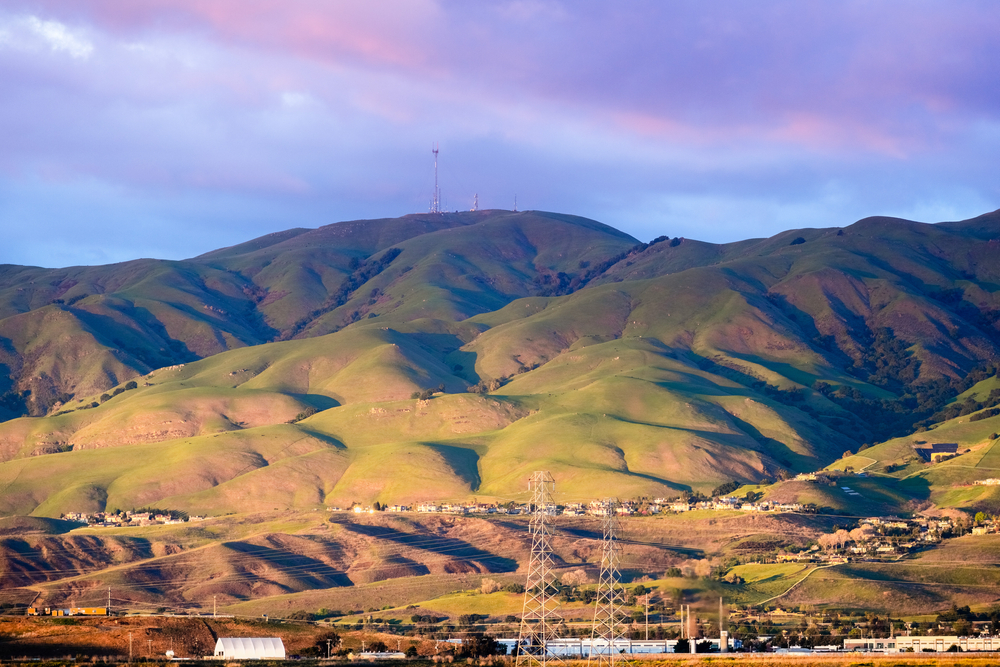
Fremont is positioned near major Bay Area job centers, including tech, manufacturing, healthcare, and education sectors. Major local employers include Tesla (with its massive manufacturing plant employing 20,000+ workers[8]), Lam Research, Western Digital, Seagate, and numerous biotech companies. The city draws commuters working toward both the Peninsula and Silicon Valley, with transit options making multiple employment corridors accessible.
Healthcare Access
Residents have access to comprehensive healthcare through Washington Hospital Healthcare System and Kaiser Permanente facilities in Fremont, plus the broader Bay Area medical network, including Stanford Health Care and UCSF Medical Center, within reasonable drives.
Taxes & California Realities
Sales tax is easy to verify and impacts daily life. The California Department of Tax and Fee Administration[29] lists Fremont’s sales tax rate at 10.250% effective January 1, 2026. This hits shopping, dining, and services, making it relevant for every relocation budget.
Lifestyle Perks of Living in Fremont
Outdoor Recreation & Things to Do
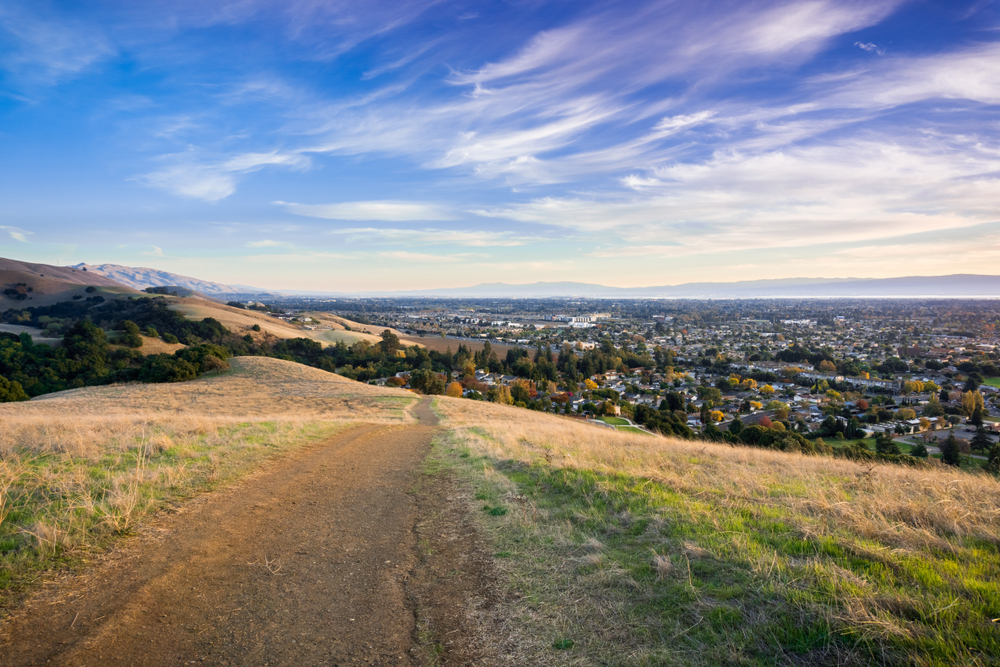
Fremont’s lifestyle centers heavily on “family + outdoors + convenience,” with Mission Peak serving as the city’s iconic outdoor badge of honor. The 2,517-foot summit offers panoramic Bay Area views accessible via challenging hiking trails that draw thousands of residents and visitors seeking both fitness and vistas[30]. The peak has become part of Fremont’s visual identity and community culture, representing the active outdoor lifestyle many residents prioritize.
Beyond Mission Peak, the city offers extensive outdoor resources. The Don Edwards San Francisco Bay National Wildlife Refuge provides coastal wetlands exploration and birdwatching. Coyote Hills Regional Park offers hiking, cycling, and nature programs. Lake Elizabeth/Central Park anchors the city’s central district with walking paths, playgrounds, and community events. Ardenwood Historic Farm combines outdoor recreation with agricultural history. The Alameda Creek Regional Trail provides paved paths connecting neighborhoods for biking and walking. These resources support year-round outdoor activity that compensates, for many residents, for the lack of urban nightlife or beach proximity.
Dining, Culture & Entertainment
Fremont’s dining and culture scene operates at a suburban scale rather than urban sophistication, providing functional options that serve daily life without destination-worthy experiences. The city offers diverse cuisines reflecting its multicultural population: Afghan, Indian, Chinese, Mexican, and American restaurants catering to various tastes and budgets. The historic districts, particularly Niles, feature locally owned cafes, breweries, and restaurants, creating neighborhood gathering spots.
Cultural venues include the Niles Essanay Silent Film Museum, celebrating early cinema history, plus community theaters and art spaces providing local programming. The city hosts farmers’ markets, seasonal festivals, and community events that strengthen neighborhood bonds. However, residents typically travel to San Francisco, San Jose, or Oakland for major cultural experiences, concerts, professional sports, and cutting-edge dining. Fremont functions more as a comfortable home base with convenient amenities than a cultural destination, a dynamic that suits families and professionals prioritizing schools, safety, and outdoor recreation over nightlife and urban sophistication.
Who Fremont Is Best For (—And Not For)
Best for:
- Families prioritizing schools and district performance
- Professionals wanting multi-modal commuting options (BART + ACE + Capitol Corridor)
- Buyers who can support Bay Area pricing but want a suburban lifestyle
- Tech workers seeking proximity to Silicon Valley employers
Less ideal for:
- Buyers needing entry-level California pricing
- People wanting dense, nightlife-driven urban environment
- Those requiring a walkable urban core or cultural sophistication
Final Thoughts: Is Living in Fremont Right for You?
Fremont is a premium Bay Area city with strong fundamentals, strong schools, real transit options, and a location that makes multiple job markets reachable. The decision usually comes down to one question: Does the Fremont lifestyle justify the Fremont price tag for your household? This isn’t rhetorical; it requires honest assessment of your financial capacity, life stage priorities, and what you actually need versus what sounds appealing in theory. It’s the same here as other places for living in California: cost is at the forefront.
The case for Fremont is grounded in quality and access. The median household income of $176,350[2] reflects the professional class drawn here: tech workers, biotech researchers, engineers, and healthcare professionals earning Bay Area salaries that actually cover Bay Area costs. The schools consistently rank among California’s best, with Mission San Jose High School[18] drawing families from across the region willing to pay premium prices for elite public education. The transit connectivity—BART[3], ACE[4], Capitol Corridor[9]—creates genuine alternatives to driving that few Bay Area suburbs can match. The 31.1-minute average commute[10] beats most regional averages, preserving time for family and life rather than traffic.
The neighborhood diversity matters more than it appears initially. Mission San Jose delivers elite education and established prestige for families prioritizing academic achievement. Niles offers historic charm and bohemian character for those valuing authenticity over perfection. Warm Springs positions tech workers steps from major employers with BART access for broader commutes. Irvington provides walkability and diversity rare in suburbs. Centerville offers housing variety and a central location. This range means families can find their fit based on priorities—schools, character, commute, walkability, price—rather than accepting homogeneous master-planned uniformity.
However, Fremont demands clear-eyed acknowledgment of what you’re accepting and what you’re paying for. The $1.48M median home value[5] and $3,000+ average rent[6][7] represent genuine barriers for most American households; this isn’t accessible housing by any reasonable national standard. The cost of living exceeds national averages substantially across all categories. The city lacks urban density, a walkable downtown, nightlife culture, or cultural sophistication that some associate with “real cities.” School quality, while strong overall, varies by campus, requiring research rather than assumptions. The weather, while pleasant, doesn’t match California sunshine stereotypes; it’s a compromise climate that satisfies most but disappoints some.
If you’re in tech or biotech earning Bay Area salaries, if you prioritize elite public schools and can afford the premium they command, if you value transit access and shorter commutes over downtown living, if you prefer suburban comfort with outdoor recreation over urban sophistication, Fremont makes rational sense. The city delivers exactly what it promises: high-functioning suburban living with excellent schools, reasonable commutes, transit options, and outdoor access in exchange for premium pricing and suburban character. For the right household at the right career stage with the right budget, Fremont isn’t expensive; it’s worth it. For those stretching financially, hoping housing becomes accessible, or expecting urban culture and nightlife, Fremont will disappoint and strain resources. The city rewards strategic planning like choosing neighborhoods based on school priorities and commute patterns, leveraging transit to reduce transportation costs, engaging with outdoor recreation that’s genuinely exceptional, and understanding that Bay Area living at this level requires accepting very high baseline costs in exchange for very high-quality infrastructure and access.
Sources
- U.S. Census Bureau. (2024). Fremont, California Population Estimate. https://www.census.gov/quickfacts/fremontcitycalifornia
- U.S. Census Bureau. (2023). Fremont, CA. Data USA. https://datausa.io/profile/geo/fremont-ca
- BART. (2025). Warm Springs / South Fremont Station. https://www.bart.gov/stations/warm
- ACE (Altamont Corridor Express). (2025). Fremont ACE Station. https://www.acerail.com/stations/fremont-ace
- Zillow. (2025). Fremont CA Home Prices & Home Values. https://www.zillow.com/home-values/46219/fremont-ca/
- Zillow. (2025). Fremont Rent Prices – ZORI. https://www.zillow.com/rental-manager/market-trends/fremont-ca/
- Zillow. (2025). Average Rent in Fremont, CA. https://www.zillow.com/rental-manager/market-trends/fremont-ca/
- Wikipedia. (2025). Fremont, California. https://en.wikipedia.org/wiki/Fremont,_California
- Capitol Corridor. (2025). Fremont/Centerville Station. https://www.capitolcorridor.org/stations/fremont/
- Census Reporter. (2023). Fremont, CA Profile. https://censusreporter.org/profiles/16000US0626000-fremont-ca/
- Alameda County Water District. (2025). Water Rates. https://www.acwd.org/
- PG&E. (2025). Rate Plans and Pricing. https://www.pge.com/
- PG&E. (2026). Natural Gas Rate Decrease Press Release. https://www.pge.com/
- Republic Services. (2025). Fremont Municipality Page. https://www.republicservices.com/
- AAA. (2026). California Gas Prices. https://gasprices.aaa.com/
- AC Transit. (2025). Maps and Schedules. https://www.actransit.org/
- Marinelli Real Estate. (2024). Mission San Jose Neighborhood Guide. https://marinellirealestate.net/neighborhoods/mission-san-jose
- John Buys Bay Area Houses. (2025). Best Neighborhoods in Fremont. https://www.johnbuysbayareahouses.com/blog/best-neighborhoods-in-fremont/
- West Coast Self-Storage. (2025). 7 Best Neighborhoods in Fremont, California. https://www.westcoastselfstorage.com/7-best-neighborhoods-in-fremont-california/
- Redfin. (2024). 21 Popular Fremont, CA Neighborhoods. https://www.redfin.com/blog/fremont-ca-neighborhoods/
- AMS Bekins. (2023). Fremont Neighborhoods Guide. https://bekinsmovingservices.com/blog/fremont-neighborhoods/