The median age of a first-time homebuyer just hit 40. That’s not a typo. The typical person buying their first home today is older than the iPhone and navigating the tightest affordability squeeze in modern history. For years, the story of the U.S. housing cycle was simple: high mortgage rates, rising prices, shrinking inventory, and a lot of frustrated buyers watching from the sidelines. But now, the tide is shifting—slowly, unevenly, and with more nuance than a single headline can capture.
The current real estate market is showing the kind of early momentum economists watch closely: mortgage rates dipping, price growth cooling, contract activity climbing, and agents reporting a rise in buyer interest. It’s the sort of shift that doesn’t roar—it knocks. The data suggests demand is waking up after a long delay, but supply and consumer confidence are not moving in lockstep. That disconnect is shaping today’s real estate market and will influence who wins, who waits, and what the next 12–18 months could look like.
Mortgage Rates and the Real Estate Market: Relief, With Limits
Mortgage rates are the heartbeat of the U.S. real estate market, and the pulse is changing. The 30-year fixed mortgage rate now sits at 6.18%, a notable drop from the 7% highs seen earlier in 2025. That decline is already triggering increased contract activity, proving that even modest rate relief can loosen demand in a rate-sensitive real estate market. While today’s rates are still dramatically higher than the 3%–4% era of 2020–2021, economists consider a sub-6% mortgage rate realistic as 2026 approaches. Buyers haven’t seen rates under 6% since September 2022, so crossing that threshold again—even briefly—could unlock a wave of delayed demand in the real estate market.
However, it’s equally important to understand what isn’t coming. Economists are not forecasting a return to 3% or 4% mortgage rates in 2026. Even optimistic projections place rates averaging around 6% next year, roughly one full percentage point lower than early 2025. In the real estate market, a 1% rate change is seismic—it impacts purchasing power, monthly payments, buyer qualification rates, and consumer psychology. That shift from 7% to 6% could add 5.5 million households to the 2026 buyer pool, including 1.6 million renters previously priced out. This isn’t just incremental improvement—this is expanded participation in the real estate market, which matters for transaction volume, lending stability, and long-term ownership trends.
For the overall health of the real estate market, lower rates mean fewer contracts collapse over appraisal gaps, more approved buyers rather than hopeful browsers, and increased liquidity. A real estate market stabilizes when financing becomes predictable enough that buyers and sellers can actually transact without guessing whether the math will work by closing day. This rate softening isn’t a fix-all, but it is reducing friction in the real estate market, and that alone is a sign of improved balance.
Pending Contracts Reveal the Real Estate Market Shift Before Closings Do
The most reliable early indicator of change in the real estate market right now is pending contract data—signed purchase agreements that signal buyer intent before closings officially register. November contract signings climbed 3.3% compared to October and are up 2.6% year-over-year. After seasonal adjustment, this marks the strongest performance of 2025 and the best reading since February 2023. In the real estate market, this matters because pending sales are forward-looking. They show direction, not hindsight. When contracts rise for three straight months, it tells economists that the real estate market is thawing at the demand level, even if closed sales haven’t fully caught up yet.
Regionally, momentum is highly uneven—an important detail in understanding the real estate market. The West surged 9.2% month-over-month, the South grew 2.4%, the Northeast gained 1.8%, and the Midwest posted 1.3% growth. The West’s outsized jump signals a regional real estate market that responds sharply to mortgage rate movement, inventory increases, and affordability improvements. Meanwhile, the Midwest briefly led in October with 5.3% contract growth before slowing again in November. This rotation of regional leaders tells us something deeper about the real estate market: demand recovery is not linear, nor national in uniformity. It is reactive, local, and influenced by seasonal inventory tightening, wage trends, and regional buyer psychology.
Realtor sentiment reinforces that the real estate market is shifting before closed sales confirm it. More than 20% of agents expect a year-over-year rise in buyer traffic within the next three months, and over 20% of mortgage purchase applications are now showing double-digit annual gains. These increases matter because a real estate market is not healthy when homes merely list—it’s healthy when contracts move, financing flows, and buyers can qualify in meaningful numbers. Rising signed agreements and purchase applications confirm that the real estate market is re-opening for participation, even if affordability remains stretched for first-time buyers.
Inventory and the Real Estate Market: More Choices Today, Tighter Risk Tomorrow
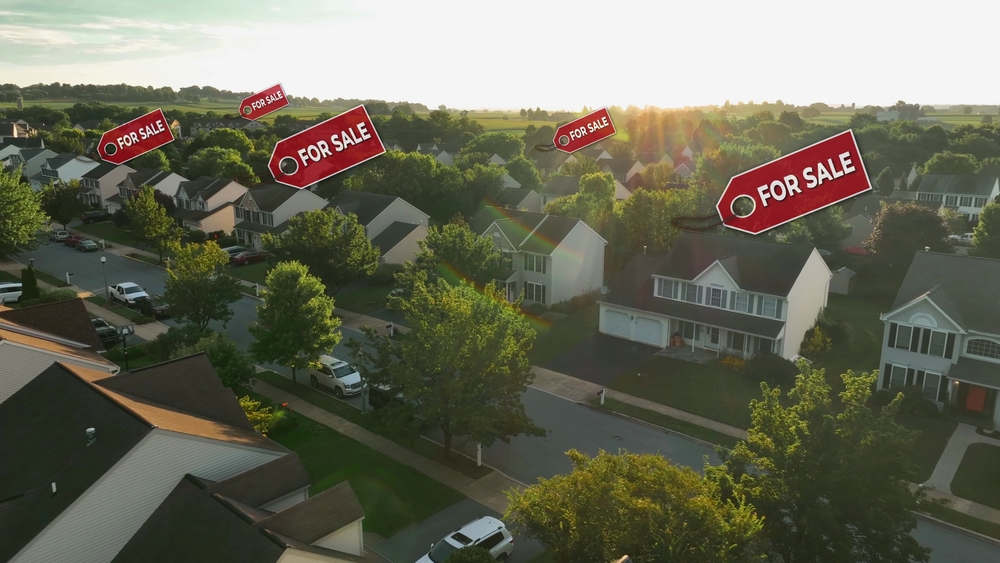
Inventory is improving, but it’s also giving mixed signals in the real estate market. November housing supply dropped 6% month-over-month—typical for winter—but remains 8% higher than one year ago. That means buyers currently have more options than they’ve had in years. In a recovering real estate market, expanded inventory reduces bidding intensity, improves price alignment with wages, and creates fewer failed deals tied to appraisal gaps. More inventory in the real estate market also means fewer desperation offers from buyers who previously felt forced to compete for a shrinking pool of homes.
But zoom out, and the story gets more interesting. The real estate market needs 1.3 million new homes in 2026, according to JPMorgan analysts, yet builder confidence remains low. Many builders are cutting prices and leaning on incentives because demand slowed enough in 2025 to create excess unsold supply. High labor costs, tariffs on materials, and economic uncertainty are making builders hesitant to increase production, even as contracts rise. This is a key tension point in the real estate market—delayed demand is returning, but supply creators are not convinced the runway is long enough to accelerate building again.
This matters for long-term market health. When builders hesitate in a rising contract environment, inventory can tighten again faster than buyers expect. A real estate market that improves on affordability but stalls on new supply eventually risks renewed pressure on pricing. Investors track this gap carefully because it can signal future scarcity, while buyers should understand that expanded inventory windows don’t always last. The real estate market isn’t short on demand—it’s short on supply confidence.
Affordability Is the Engine of the Current Real Estate Market Momentum
Affordability—not discounts—is driving today’s momentum in the real estate market. The median existing-home price in November was $409,200, still high by historical standards, but mortgage rates falling and median family incomes rising faster than prices have improved conditions enough for buyers to test the market again. Wage growth outpacing price growth is the strongest foundation for stability in a real estate market because it supports sustainable participation, not speculative frenzy.
Economists describe 2025 as a balancing year for the real estate market, but Lawrence Yun emphasizes that affordability gains are pulling more buyers into the market thanks to lower mortgage rates, rising wages, and inventory running 8% higher than last year. Local market experts echo the same truth about the real estate market: when mortgage rates fall, buyers return. This return is not about emotional optimism—it’s about math improving enough that buyers can participate without being squeezed out before making an offer.
For sellers and investors, this shift is healthy. A real estate market stabilizes when affordability widens the buyer pool, allowing transaction volume to increase even if price acceleration slows. Liquidity improves, lending risk decreases, and ownership becomes possible for households who previously had to rent by default. This is demand expansion through capability, which is exactly how a real estate market rebuilds long-term resilience.
What Today’s Real Estate Market Signals for 2026 and Beyond
The real estate market isn’t recovering because prices are falling—it’s recovering because more households can participate again. But the next phase hinges on confidence: consumer financial confidence, builder supply confidence, and labor market stability. Economists are watching jobs closely, but do not currently project a major labor downturn. If job data weakens, it could overshadow positive rate and price conditions—but experts see that as a risk, not a forecast.
The bigger signal in the real estate market is delayed demand meeting supply hesitation. That gap will shape the next cycle. If rates cross below 6%, the buyer pool could widen dramatically, but without new supply momentum from builders, inventory may compress again later in 2026. This isn’t instability—it’s a mismatch in timing between demand readiness and supply willingness, a common phase shift in a real estate market moving toward its next chapter.
If you have questions about your local market or personal timing, talk to your real estate agent. The real estate market is national in data, but personal in impact. Strategy depends on location, goals, and timing, and those are best navigated with someone who sees your market up close.
FAQ: The U.S. Real Estate Market Right Now
Are buyers gaining leverage in today’s real estate market?
Yes. Contract momentum is rising while price growth cools and inventory remains higher than last year, creating better negotiation conditions for buyers in the real estate market.
Will mortgage rates return to 3% or 4% in 2026?
No. Economists consider sub-6% possible, but do not project a return to pandemic-level mortgage rates in the real estate market.
Is rising pending contract activity good for sellers?
Yes. More signed agreements mean more qualified buyers and fewer appraisal-related deal failures, which strengthens transaction volume in the real estate market.
Why is builder confidence low if contracts are rising?
Builders are responding to 2025’s reduced demand and elevated costs. Supply creators are cautious even as buyer participation increases in the real estate market.
Is affordability improving because prices are dropping?
No. Affordability is improving because mortgage rates dipped and wages are growing faster than home prices in the real estate market.
Should investors pay attention right now?
Yes. Demand is returning ahead of supply acceleration, which can create a strategic acquisition window in the real estate market.