


Oakland refuses to be anyone’s consolation prize, and that’s exactly why it matters. While its more famous neighbor across the Bay gets all the press—the tech billions, the Victorian postcards, the fog that somehow gets personified on X—Oakland has quietly built something more valuable than glamour: legitimacy. Therefore, living in Oakland offers things that other California cities simply do not.
This is a real city with actual depth, where artists can still afford to create, where restaurants reflect genuine communities rather than venture capital trends, and where neighborhoods maintain distinct identities that weren’t focus-grouped into existence. Oakland doesn’t try to be San Francisco, and if you’re looking here because you couldn’t afford “there,” you might just discover you’ve made the better choice.
The economic equation is straightforward and compelling. Median home prices in Oakland sit around $767K[1][2][3]—still eye-watering by national standards, but dramatically more accessible than San Francisco’s $1.27-1.5M median. Rent averages between $2,003 and $2,627 per month[4][5][6][7] depending on unit size and neighborhood, offering breathing room compared to San Francisco’s $3,000+ baseline. Simply put, Oakland offers more affordable options than living in California’s other large cities.
For buyers, especially, living in Oakland provides a realistic path to homeownership in the Bay Area, with actual houses featuring yards, garages, and space to live rather than just exist. This affordability gap doesn’t mean Oakland is cheap—it’s not—but it means families can buy instead of endlessly renting, professionals can save money instead of burning every dollar on housing, and young people can actually imagine a financial future beyond paycheck-to-paycheck survival.
But Oakland offers more than just relief from San Francisco’s price tag. This city has soul that hasn’t been sanitized away by wealth. The diversity isn’t performative; it’s lived, complicated, and real. You’ll find some of the Bay Area’s best Mexican, Ethiopian, Vietnamese, soul food, and Korean restaurants operating in neighborhoods that have supported them for decades.
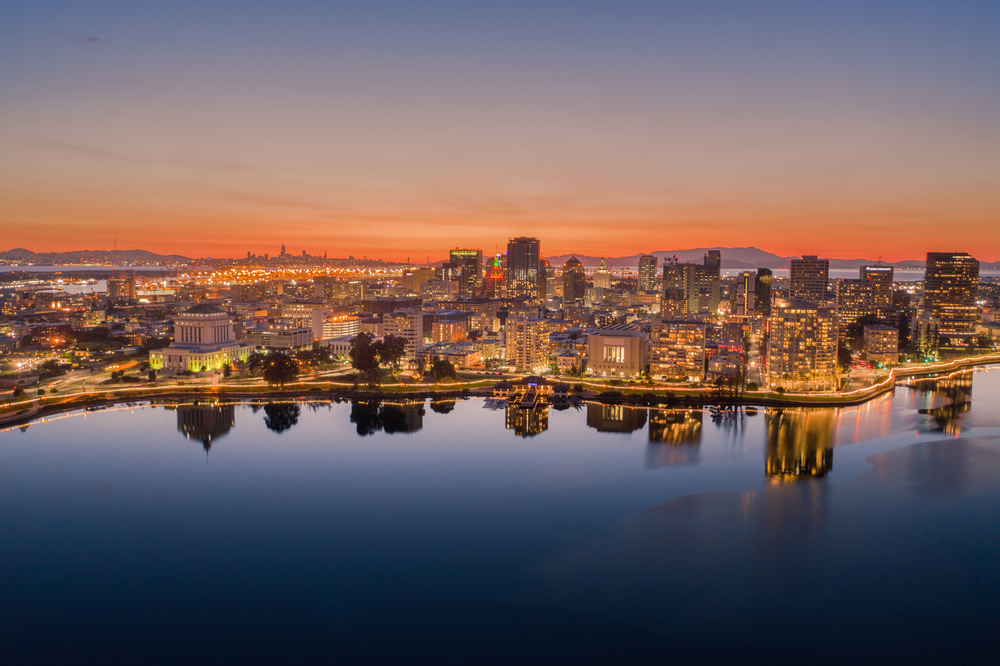
Meanwhile, the arts scene isn’t curated for tourists; it’s made by and for locals, from street murals in the Fruitvale to gallery openings in Temescal. Lake Merritt provides a genuinely beautiful urban park experience where you’ll see the entire spectrum of Oakland life jogging, walking, and gathering. Jack London Square offers waterfront dining and ferry access without San Francisco’s crowds. The Oakland Hills deliver stunning views and hiking trails that feel worlds away from urban intensity.
Oakland’s location amplifies its value proposition. BART connects directly to San Francisco and the Peninsula, making commutes manageable for those working across the Bay. The average commute time sits around 30.5-31.2 minutes[8][9][10], reasonable by Bay Area standards. Major employers include Kaiser Permanente, the Port of Oakland, and countless tech workers who live here while working in San Francisco or Silicon Valley.
The regional connectivity means you can access Bay Area opportunities while living in Oakland, a city that feels more human-scaled and navigable. And unlike San Francisco’s micro-neighborhoods crammed into 47 square miles, Oakland’s geography allows for genuine distinction between areas—hillside retreats in Montclair, waterfront condos in Jack London Square, tree-lined streets in Rockridge, cultural richness in Fruitvale.
Yet Oakland demands honesty about its challenges. Safety varies dramatically by neighborhood and even by block, with some areas experiencing property crime rates that require vigilance and awareness. The city’s reputation for crime isn’t entirely unwarranted, though it’s also more complicated and neighborhood-specific than headlines suggest.
Visible homelessness and urban struggles exist here as in most California cities. Some areas lack the infrastructure and amenities of more affluent neighborhoods. The city’s character—rough-edged, authentic, community-driven—won’t appeal to everyone, particularly those seeking polished, master-planned environments.
But for those who value cultural authenticity over aesthetic perfection, community over exclusivity, and genuine urban living over sanitized simulation, living in Oakland delivers something increasingly rare: a major city that still feels real. This guide will help you determine whether Oakland’s particular combination of affordability, diversity, access, and authenticity aligns with what you’re seeking in Bay Area living.
Quick Snapshot of Living in Oakland
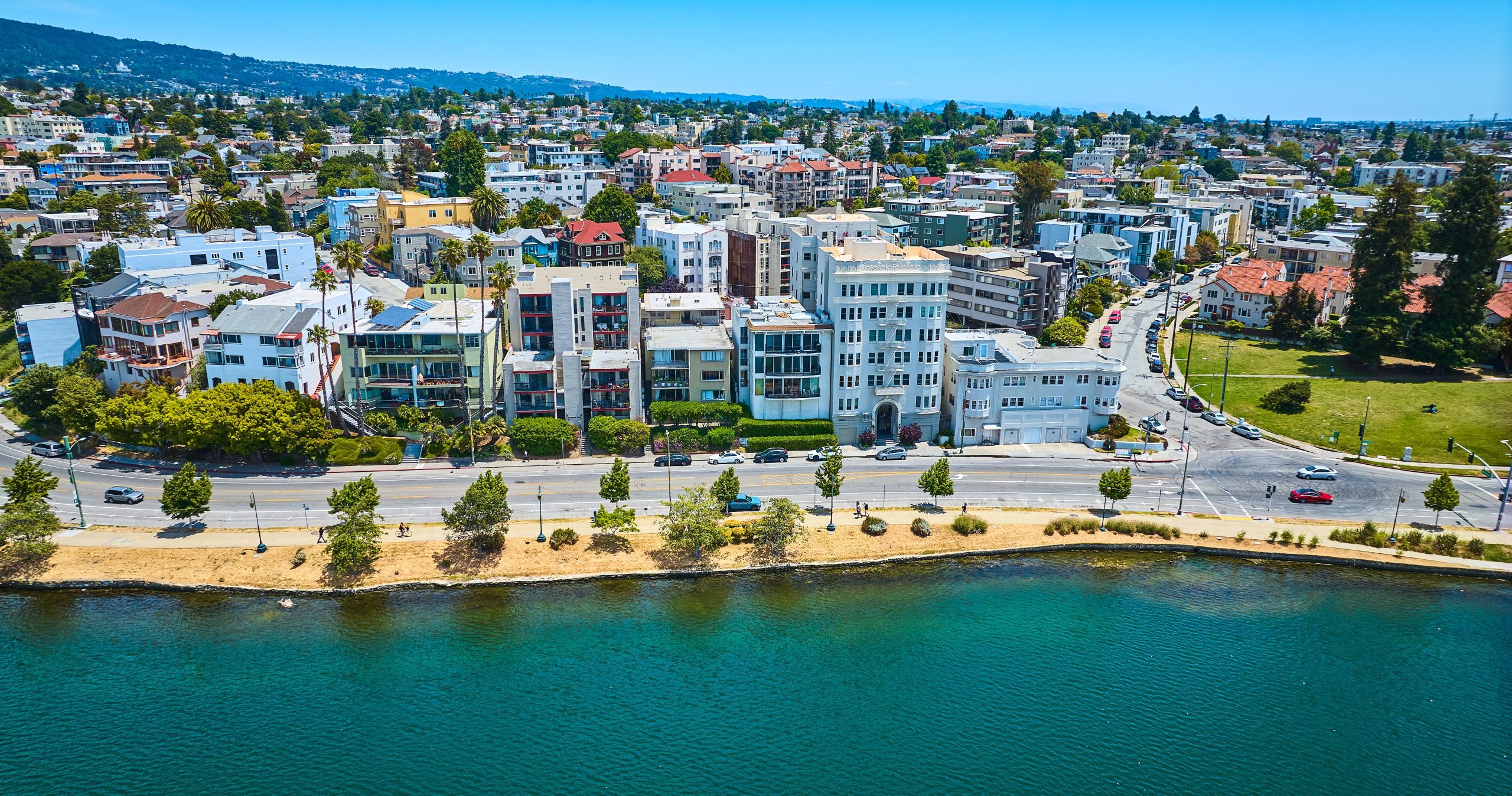
Oakland, California is a major East Bay city known for its cultural diversity, creative energy, waterfront access, and proximity to San Francisco—without being San Francisco. It’s a city of distinct neighborhoods, strong local identity, and deep roots in art, music, food, and activism.
Population: ~438,000–444,000 residents[11][12][13]
County: Alameda County
Median Household Income: ~$97,369[11]
Median Home Value: ~$767,000–$859,000[1][2][3]
Median Rent: ~$2,003–$2,627/month[4][5][6][7]
Average Commute: ~30.5–31.2 minutes[8][9][10]
Vibe: Urban, diverse, creative, community-driven
Cost of Living in Oakland
Housing Costs
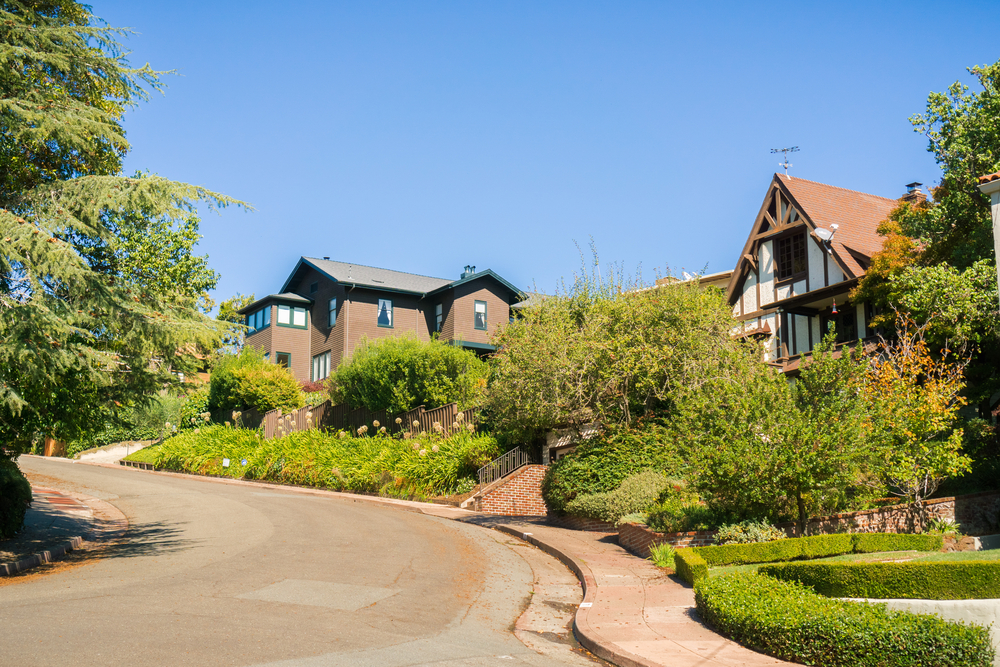
Housing is the single biggest cost factor for Oakland residents (and for pretty much anyone living in California), though it is generally more affordable than San Francisco, especially for single-family homes.
- Home prices: Median home values typically fall between $767K–$859K[1][2][3], with condos and townhomes offering lower entry points.
- Rent: Average rents range from $2,003–$2,627/month[4][5][6][7], depending on neighborhood, proximity to transit, and unit size.
- Housing stock: Victorian and Craftsman homes, apartment buildings, duplexes, condos, and newer mixed-use developments.
- Context: Oakland often appeals to buyers and renters priced out of San Francisco but still wanting an urban, Bay Area lifestyle.
Utilities
Utility costs in Oakland are moderate by California standards.
- Mild coastal-influenced temperatures reduce the need for air conditioning.
- Electricity, gas, water, trash, and internet costs are generally in line with other Bay Area cities.
- Older housing stock may have higher heating or maintenance-related utility expenses.
Gas & Transportation
Transportation costs vary widely based on lifestyle.
- Gas prices follow Bay Area averages, among the highest in the nation.
- Many residents rely on BART, AC Transit, biking, or walking, reducing the need for daily car use.
- Parking availability and costs vary significantly by neighborhood.
Key note: Oakland is one of the more transit-friendly cities in California outside San Francisco.
Living in Oakland: Groceries & Everyday Costs
Grocery prices are well above the national average, driven by Bay Area labor and real estate costs.
Oakland’s diverse population means access to a wide range of ethnic grocery stores and markets.
Dining spans from affordable local spots to high-end restaurants, often with better value than SF.
Lifestyle & Quality of Life

Traffic & Commute
Oakland’s location offers strong regional connectivity—but congestion is real.
- Average commute times are around 30.5–31.2 minutes[8][9][10], influenced by bridge crossings and BART schedules.
- Major routes include I-880, I-580, I-980, and access to Bay Bridge and San Mateo Bridge.
- Many residents choose neighborhoods specifically based on BART proximity to reduce commute stress.
Living in Oakland: Neighborhoods & Areas to Know
Oakland is extremely neighborhood-driven, and choosing the right area matters significantly for your daily experience.
Rockridge
Rockridge represents Oakland’s most affluent and walkable neighborhood, centered around College Avenue and the Rockridge BART station. This is where Oakland’s professional class—tech workers, doctors, lawyers, entrepreneurs—settles when they want suburban comfort without leaving urban convenience.
The commercial district along College Avenue offers upscale boutiques, organic grocery stores, popular restaurants, and coffee shops that create a village-like atmosphere within the city. The neighborhood’s tree-lined residential streets feature beautifully maintained Craftsman homes, Mediterranean-style houses, and modern renovations, with home prices typically ranging from $1.2M to $2M+ depending on size and condition.
What distinguishes Rockridge is its combination of walkability, BART access, and family-friendly infrastructure. Parents can walk children to well-regarded public schools, residents can BART to San Francisco for work, and weekend errands don’t require driving. The neighborhood attracts established professionals, families prioritizing education and safety, and anyone willing to pay premium prices for Oakland’s most polished residential experience. It’s living in Oakland at its best.
However, this desirability comes with trade-offs—limited diversity compared to other Oakland neighborhoods, higher costs that rival or exceed some San Francisco areas, and an atmosphere that can feel insular or exclusive. The neighborhood lacks some of Oakland’s grittier authenticity, feeling more like Berkeley or certain Peninsula communities. For those seeking walkable urban living with excellent schools and BART access, who can afford the premium, Rockridge delivers Oakland’s most conventional and comfortable neighborhood experience.
Temescal
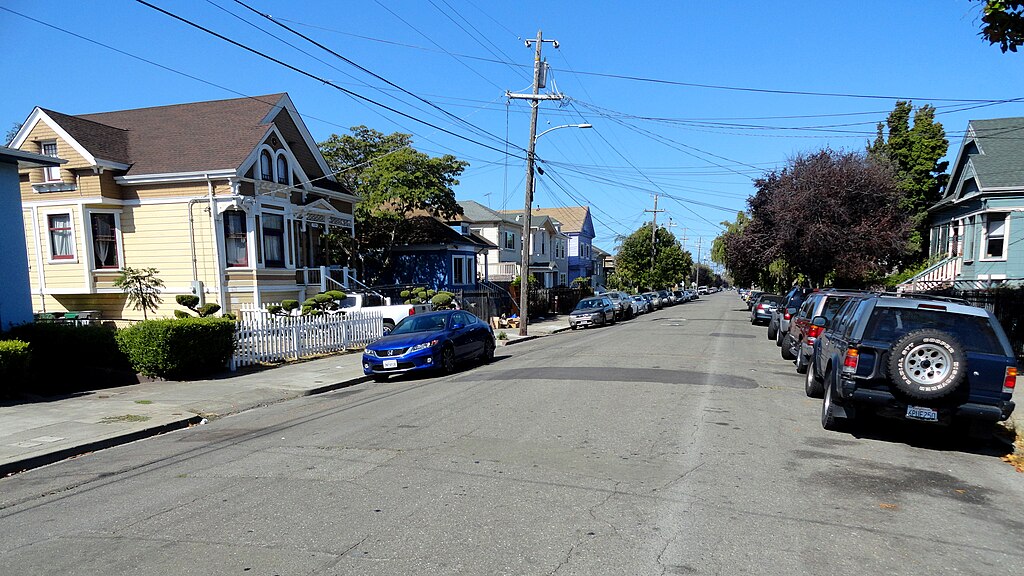
Fabio Achilli from Milano, Italy, CC BY 2.0 via Wikimedia Commons
Temescal embodies Oakland’s creative energy and food scene, attracting younger professionals, artists, and anyone seeking neighborhood character without Rockridge’s price tag. Centered around Telegraph Avenue and 40th Street, Temescal has transformed over the past decade from a somewhat overlooked area into one of Oakland’s trendiest neighborhoods.
The commercial corridors offer an impressive concentration of independently owned restaurants, bars, coffee shops, and boutiques—Korean tacos, craft breweries, vintage clothing stores, artisan ice cream, and farm-to-table dining all within walking distance. The Temescal Alley, a collection of small shops and eateries in converted garages, exemplifies the neighborhood’s creative, community-oriented vibe.
Housing in Temescal consists primarily of apartment buildings, converted Victorians, duplexes, and some single-family homes, with prices generally more accessible than Rockridge, though rising steadily. Rent for a one-bedroom typically ranges from $2,200-$2,800, while homes sell in the $800K-$1.2M range depending on size and condition.
The neighborhood attracts late-20s to early-40s professionals who prioritize walkability, food culture, and nightlife over space and quiet. MacArthur BART station provides transit access, and the relatively flat terrain makes biking practical. The main trade-offs are density, limited parking, and street activity that some find vibrant and others find intrusive. Property crime exists, requiring urban awareness. It’s certainly one of the tradeoffs of living in Oakland.
However, for those seeking Oakland’s most dynamic food and social scene, who value independent businesses over chains, and who want to be at the center of the city’s creative culture, Temescal offers exactly that experience.
Lake Merritt

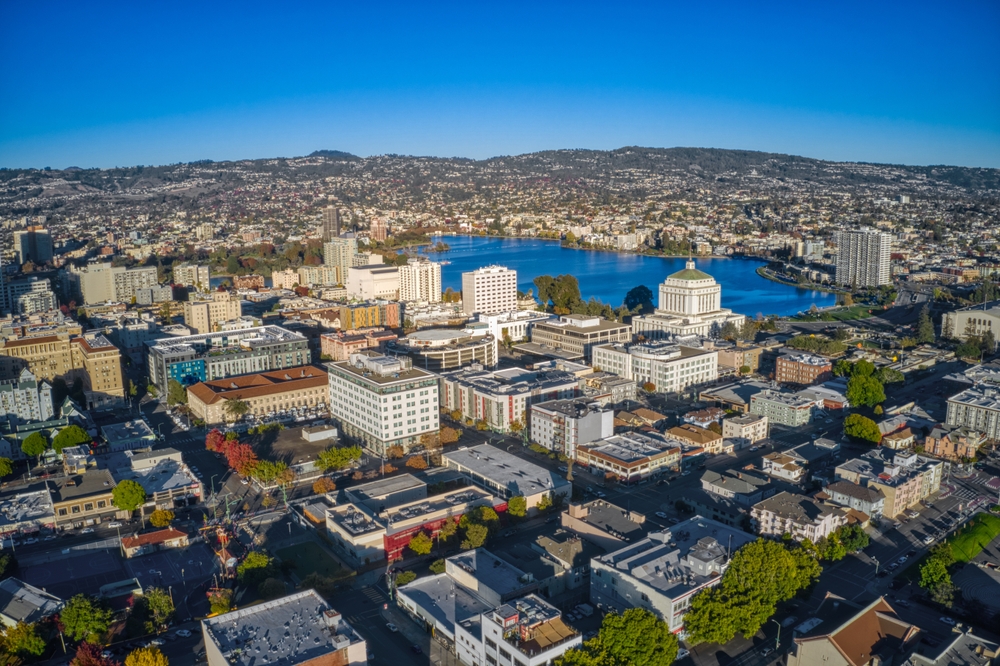
Lake Merritt neighborhood wraps around Oakland’s crown jewel—a 155-acre tidal lagoon that provides scenic beauty, recreation, and a gathering space for the entire city. The neighborhood itself is diverse in both demographics and housing stock, ranging from luxury high-rise condos with lake views to apartments in converted Victorians to single-family homes on surrounding streets.
The 3.4-mile loop around the lake draws joggers, walkers, and cyclists daily, while the shores host farmers markets, festivals, and community events. Grand Avenue and Lakeshore Avenue offer restaurants, coffee shops, and local businesses that cater to neighborhood residents.
Living near Lake Merritt means waking up to water views and urban greenspace—a rare combination in dense cities. Home prices vary dramatically depending on proximity to the lake and building type, ranging from $600K for condos to $1.5M+ for homes with prime locations. Rent similarly spans a wide range, from $2,000 for studios to $3,500+ for larger apartments with views.
The neighborhood attracts diverse residents—young professionals in newer condos, established families in surrounding homes, long-term residents in rent-controlled apartments. The Grand-Lake neighborhood section offers a particularly strong sense of community with its own theater, shops, and residential feel. Living in Oakland, you don’t always get amenities like this just outside your door.
However, Lake Merritt also experiences the full spectrum of Oakland urban challenges—property crime, homelessness visibility, and variable safety depending on specific location and time of day. For those who prioritize access to nature within urban living, who appreciate diversity and community energy, and who can navigate urban realities with awareness, Lake Merritt offers one of Oakland’s most distinctive living experiences.
Montclair
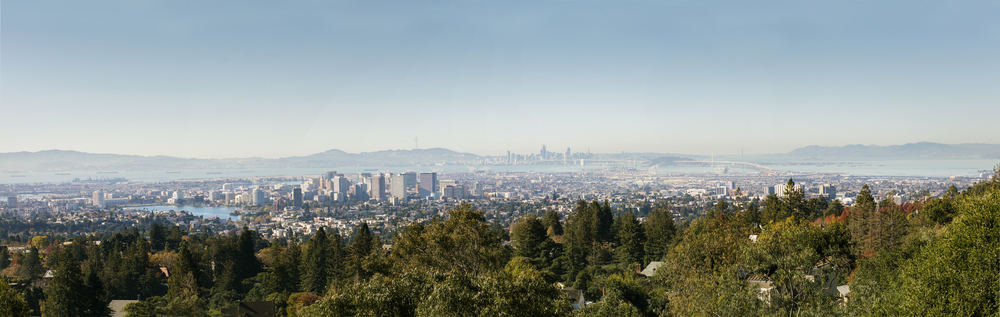
Montclair offers Oakland’s most suburban experience, tucked into the hills with winding streets, larger lots, and a village commercial district that feels more like a small town than an urban neighborhood. Located in the Oakland Hills, Montclair attracts families seeking space, excellent schools, and a quieter environment while maintaining an Oakland address and access.
The commercial district along Mountain Boulevard and Moraga Avenue offers grocery stores, restaurants, cafes, and services within a walkable village center. The surrounding residential streets feature mid-century ranch homes, contemporary hillside houses, and tree-canopied streets that create a genuinely suburban atmosphere.
Home prices in Montclair typically range from $1M to $2M+, reflecting the desirability of space, schools, and safety. The neighborhood attracts established professionals, families with children, and anyone willing to trade urban convenience for residential tranquility. Schools consistently rank among Oakland’s best, making Montclair a top choice for education-focused families.
Living in Oakland on this hillside location provides spectacular views, access to hiking trails in nearby regional parks, and a sense of separation from Oakland’s urban core. However, this suburban character comes with trade-offs—longer commutes to downtown Oakland or San Francisco, limited walkability outside the village center, car dependency for most activities, and an atmosphere that lacks Oakland’s diversity and urban energy.
Montclair can feel more like Orinda or Walnut Creek than Oakland proper. For those seeking traditional suburban living with good schools and safety, who don’t mind driving for work and activities, Montclair provides exactly that within Oakland city limits.
Jack London Square
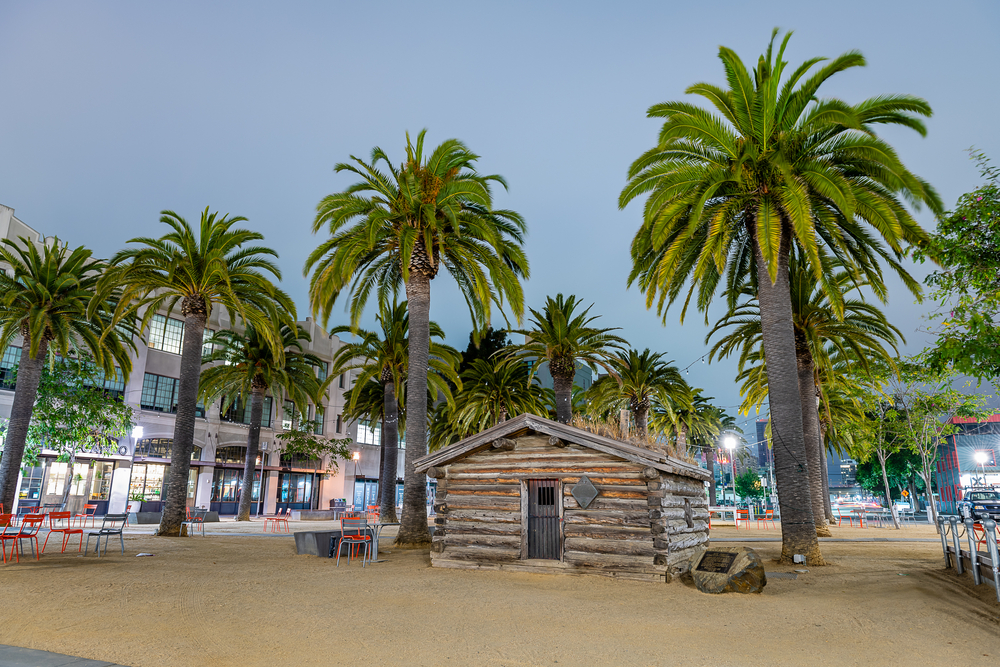
Jack London Square offers Oakland’s most distinctive waterfront living, with converted warehouses, modern condos, and direct access to the estuary. Named after the famous author who spent time in Oakland’s waterfront district, the area has transformed from industrial port to mixed-use neighborhood with restaurants, entertainment venues, ferry terminals, and residential towers. The waterfront promenade provides walking paths, outdoor seating, and Bay views, while the ferry offers direct service to San Francisco—a compelling alternative to BART or bridge traffic.
Housing in Jack London consists almost entirely of condos and apartments in converted or new buildings, with prices ranging from $500K-$900K for condos and $2,500-$4,000+ monthly rent for apartments. The neighborhood attracts young professionals, empty nesters, and anyone seeking low-maintenance urban living with waterfront access. Proximity to downtown Oakland, multiple BART stations, and the ferry terminal makes commuting flexible. Living in Oakland simply comes with the need to commute, and this area helps minimize that time.
The area offers numerous restaurants, bars, and entertainment venues within walking distance, creating an active social scene. However, Jack London also experiences challenges—higher property crime rates than hillside neighborhoods, limited grocery and everyday services requiring short drives, and an atmosphere that can feel somewhat sterile or corporate compared to more established Oakland neighborhoods.
The area is also still developing, with vacant lots and ongoing construction. For those who prioritize waterfront access, transit options, and modern amenities over neighborhood character and established community, Jack London delivers a unique Oakland living experience.
Fruitvale
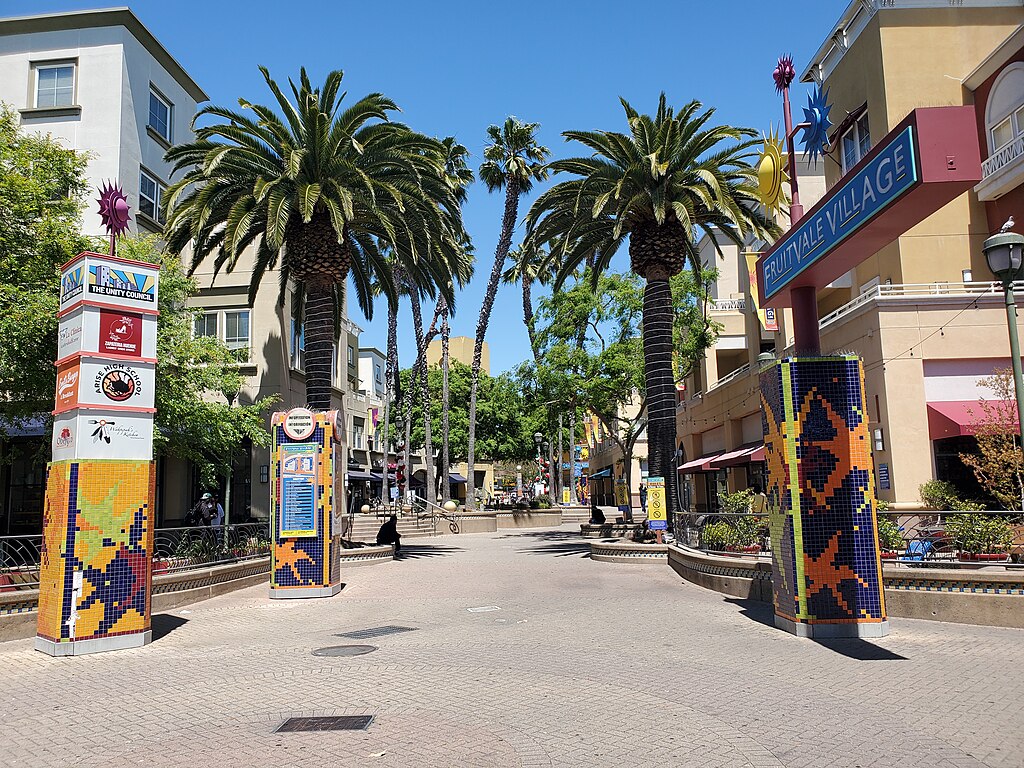
Pi.1415926535, CC BY-SA 4.0 via Wikimedia Commons
Fruitvale represents Oakland’s thriving Latino community and cultural heart, offering authentic food, strong community ties, and transit access at more affordable prices than western Oakland neighborhoods. Centered around International Boulevard and the Fruitvale BART station, the neighborhood pulses with activity—taquerias, panaderias, produce markets, shops selling everything from quinceañera dresses to soccer jerseys. The Fruitvale Village, a transit-oriented development around the BART station, includes affordable housing, retail, and community services that exemplify successful urban planning.
Housing in Fruitvale consists primarily of apartment buildings, duplexes, and older single-family homes, with prices significantly more accessible than western Oakland—homes typically $600K-$800K, rent $1,800-$2,500 for one-bedrooms, making living in Oakland more affordable than other suburbs. The neighborhood attracts working-class families, Latino immigrants, young professionals seeking affordability, and anyone who values cultural authenticity and community. The BART access provides excellent commute options to San Francisco and beyond.
However, Fruitvale faces challenges that require honest acknowledgment—higher crime rates than affluent neighborhoods, limited services in some areas, and displacement pressures as Oakland gentrifies. Some parts feel rougher or less maintained than western neighborhoods. But for those who value cultural richness, community ties, authentic food, and affordability, who can navigate urban realities and appreciate neighborhoods for their genuine character rather than polished aesthetics, Fruitvale offers a version of Oakland that remains accessible and real.
Living in Oakland: Schools & Education
Oakland offers a wide range of educational options:
- Oakland Unified School District (OUSD) serves the city, with quality varying significantly by school.
- Charter and private schools are commonly used by families.
- Proximity to UC Berkeley[14], Mills College, and other East Bay institutions adds educational depth.
School selection is often one of the most important factors for families considering Oakland.
Safety & Crime
Safety is one of the most discussed topics around Oakland—and it varies greatly by neighborhood.
- Some areas experience higher rates of property and violent crime.
- Other neighborhoods are considered stable, quiet, and family-friendly.
- Perception of safety can change block by block.
Important takeaway: Neighborhood-level research and local insight are essential when evaluating Oakland.
Living in Oakland: Weather & Climate
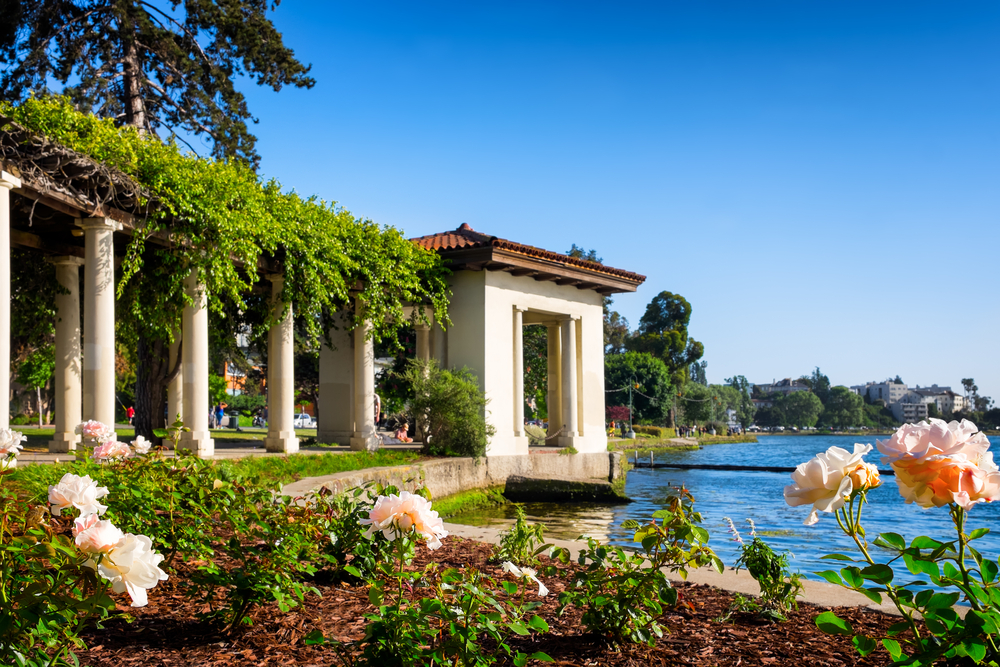
Oakland enjoys a Mediterranean climate with fewer extremes than inland California, offering mild temperatures year-round that make outdoor living comfortable and predictable. Summers are warm but not scorching, typically reaching the mid-70s to low-80s, significantly cooler than East Bay cities further inland like Walnut Creek or Concord.
Unlike San Francisco, Oakland experiences less fog—particularly in eastern and inland neighborhoods—meaning more consistent sunshine and warmth throughout summer months. The coastal influence still moderates temperatures, preventing the extreme heat that affects the Central Valley, while allowing enough sunshine to actually enjoy summer weather. It’s one of the best features of living in Oakland!
Winters are mild (as you’d expect living in California), with daytime temperatures typically in the 50s and 60s, rarely dipping to freezing. The region receives most of its limited rainfall between November and March, with dry conditions dominating the rest of the year. Oakland’s microclimate variations mean hillside neighborhoods in areas like Montclair may experience slightly cooler temperatures and more fog than flatter areas near the bay.
The lack of extreme weather—no hurricanes, tornadoes, heavy snow, or oppressive humidity—supports year-round outdoor recreation, from hiking in the Oakland Hills to kayaking on Lake Merritt to simply walking neighborhoods without seasonal constraints. For those seeking California sunshine without Desert heat, temperate weather that rarely requires air conditioning or heavy heating, and climate stability that allows planning outdoor activities with confidence, Oakland delivers an ideal Mediterranean climate that combines the best of coastal moderation and inland warmth.
Work, Economy & Practical Living
Job Market & Major Employers
Oakland’s economy is diverse and regionally integrated:
- Healthcare systems (Kaiser Permanente)
- Education and public sector
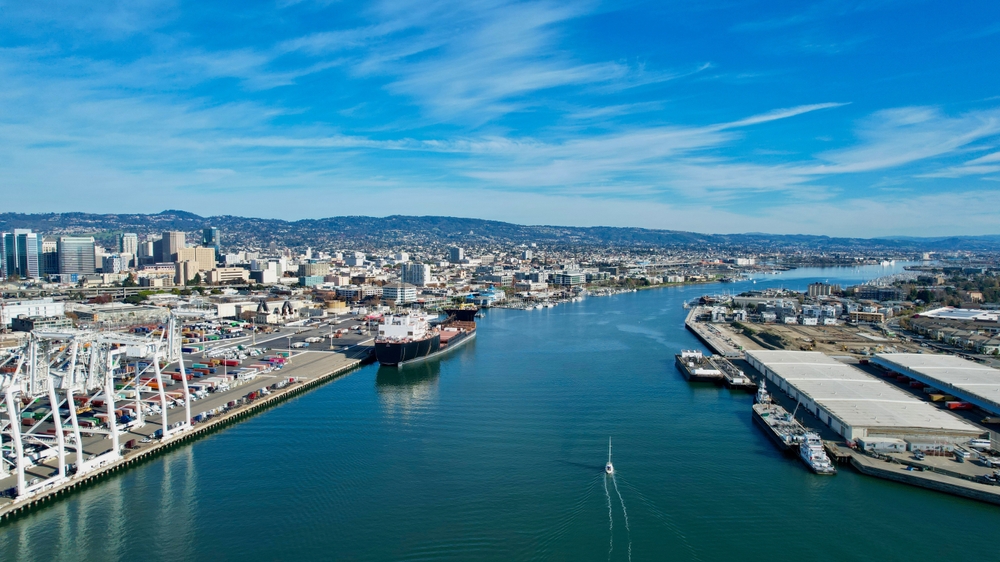
- Port of Oakland[15] (one of the busiest on the West Coast)
- Tech and creative industries
- Many residents commute to San Francisco or Silicon Valley
Oakland benefits from Bay Area wages while offering slightly lower housing costs.
Healthcare Access
Oakland has strong healthcare access:
- Major hospitals, specialty clinics, and regional medical centers
- Easy access to UC San Francisco and Bay Area healthcare networks
Healthcare availability is considered strong across most neighborhoods.
Taxes & California Realities
Oakland residents face typical California costs:
- High state income taxes
- Sales tax rates above national average
- Property taxes governed by Proposition 13, though values remain high
Taxes are a meaningful part of overall cost-of-living calculations, especially for higher earners.
Lifestyle Perks of Living in Oakland

Outdoor Recreation & Things to Do
Oakland offers excellent access to nature and outdoor recreation that rivals any major urban area in California. The Oakland Hills provide thousands of acres of regional parkland with hiking trails, redwood groves, and panoramic views of the Bay. Redwood Regional Park, Joaquin Miller Park, and numerous other open spaces offer genuine wilderness experiences within city limits—you can be hiking among towering redwoods twenty minutes after leaving downtown. Lake Merritt’s 3.4-mile loop serves as the city’s central gathering space for running, walking, cycling, and community events, with kayaking and paddleboarding available directly on the lake.
Beyond Oakland’s boundaries, the city’s location provides exceptional access to regional recreation. The East Bay Regional Parks system offers dozens of parks and preserves within short drives. Point Pinole and Tilden Regional Park provide coastal and hillside hiking. Lake Chabot offers boating and fishing. The Alameda shoreline provides flat, scenic biking and walking paths.
Within an hour, residents can reach wine country in Napa and Sonoma, beaches in Marin and the Peninsula, or mountain trails in Mount Diablo. BART and ferry access mean San Francisco’s parks, waterfront, and cultural attractions are readily available without driving. Oakland’s combination of urban density and immediate nature access creates lifestyle flexibility—you can attend a Warriors game, hike redwood trails, and enjoy waterfront dining all in one day without extensive travel or planning.
Dining, Culture & Entertainment

Oakland has cultivated one of the Bay Area’s most exciting and authentic food scenes, driven by cultural diversity and a critical mass of talented chefs who choose Oakland over San Francisco’s higher rents and pressure.
The city’s Mexican food rivals anything in California—taquerias in Fruitvale, upscale Mexican restaurants in Temescal, and everything in between. Ethiopian restaurants along Telegraph Avenue showcase Oakland’s significant East African community. Korean, Vietnamese, soul food, Caribbean, and countless other cuisines operate at high levels throughout the city.
The farm-to-table movement thrives here, with chefs sourcing from nearby farms and creating seasonal menus that change with availability. Importantly, Oakland’s food scene maintains affordability and authenticity that’s increasingly rare in San Francisco—you can find world-class meals at neighborhood restaurants without reservations weeks in advance or inflated prices.
Beyond food, Oakland’s arts and culture scene reflects genuine community rather than tourist-oriented attractions. The Fox Theater and Paramount Theatre host major concerts and events in stunning historic venues. First Fridays transform Telegraph Avenue into a massive street party with art, music, food trucks, and community gathering.
Galleries, studios, and performance spaces throughout the city showcase local artists and musicians. The Oakland Museum of California provides excellent exhibitions on state history, art, and culture. Jack London Square offers waterfront entertainment and dining.
The city’s creative energy—from street murals to underground music venues to community theaters—emerges organically from neighborhoods rather than downtown development projects. For those who value cultural authenticity over polished tourist experiences, who appreciate diverse food scenes over Michelin stars, and who want arts that reflect actual communities rather than wealth, living Oakland delivers daily cultural engagement that feels genuine and accessible.
Who Oakland Is Best For (—And Not For)

Best for:
- People who want Bay Area access without SF density
- Creatives, entrepreneurs, and community-oriented residents
- Transit-friendly lifestyles
- Buyers seeking single-family homes at lower prices than SF
Less suited for:
- People uncomfortable with urban variability in safety
- Those seeking a highly polished or master-planned environment
- Residents wanting extremely quiet, suburban living
Final Thoughts: Is Living in Oakland Right for You?

Oakland is complex, vibrant, and deeply human—and that statement requires unpacking because it captures both the city’s greatest strengths and its persistent challenges. This isn’t a city that’s been smoothed over by wealth, master-planned into uniformity, or marketed into a lifestyle brand.
Oakland maintains rough edges, authentic communities, and real urban problems alongside genuine cultural richness, affordability (by Bay Area standards), and neighborhood character that hasn’t been sanitized away. The question isn’t whether Oakland is “good” or “bad”—it’s whether you can engage with a real city on its own terms rather than expecting it to conform to some idealized urban fantasy.
The case for Oakland is substantial and compelling. Housing affordability, while not cheap by national standards, provides realistic paths to homeownership and financial stability that San Francisco has made virtually impossible for anyone without tech wealth or family money. You can buy an actual house with a yard, build equity, and achieve financial goals that remain aspirational fantasies across the Bay.
The cultural diversity isn’t performative; it’s lived, complicated, and real, reflected in food, arts, community organizations, and daily interactions. The neighborhood variety means you can find your fit, whether that’s walkable Rockridge, creative Temescal, waterfront Jack London, or culturally rich Fruitvale. BART access provides excellent connectivity to San Francisco and Silicon Valley jobs without requiring San Francisco housing costs. The outdoor recreation—from Lake Merritt to Oakland Hills to regional parks—offers daily nature access that coastal cities charge premium prices to provide.
However, Oakland demands honesty about its challenges and your capacity to navigate them. Safety varies dramatically by neighborhood and block, with property crime rates that require urban awareness and precautions many suburban residents find exhausting. Some areas experience violence that’s more than abstract statistics; it’s a reality that affects daily life and sense of security.
The also city lacks the infrastructure, services, and polish of wealthier communities, with potholes, limited parking, and maintenance issues that reflect budgetary constraints. Visible homelessness and urban struggles exist throughout Oakland, more pronounced in some areas than others. The public schools vary wildly in quality, too, requiring extensive research and potentially private school tuition or strategic residence choices. Some neighborhoods feel rough, neglected, or unsafe in ways that won’t suit everyone, particularly those seeking comfort and predictability.
The fundamental question is what you prioritize and what you can accept. If you value cultural authenticity over aesthetic perfection, community over exclusivity, affordability over prestige, and genuine urban living over sanitized simulation, Oakland offers something increasingly rare in coastal California. If you want Bay Area opportunities and access without Bay Area housing costs, if you appreciate diversity and creativity, if you’re comfortable navigating urban realities with awareness rather than fear, Oakland can be an extraordinary place to live.
But if you need perfect safety and polished environments, if urban challenges feel overwhelming rather than manageable, if you’re expecting Oakland to be San Francisco with lower rent, you’ll be disappointed. Oakland isn’t trying to be anything other than itself—complex, creative, affordable(ish), and real. For the right person or family, that’s exactly enough.
Sources
- Redfin. (2025). Oakland Housing Market. https://www.redfin.com/city/13654/CA/Oakland/housing-market
- RealtyTrac. (2025). Oakland CA Real Estate Market Trends. https://www.realtytrac.com/market-trends/oakland-ca/
- NeighborhoodScout. (2025). Oakland, CA Real Estate Market. https://www.neighborhoodscout.com/ca/oakland/real-estate
- Apartment List. (2025). Average Rent in Oakland, CA & Rent Price Trends. https://www.apartmentlist.com/rent-report/ca/oakland
- Zillow Rental Manager. (2025). Average Rental Price in Oakland, CA. https://www.zillow.com/rental-manager/market-trends/oakland-ca/
- RentCafe. (2025). Average Rent in Oakland, CA: 2025 Rent Prices by Neighborhood. https://www.rentcafe.com/average-rent-market-trends/us/ca/oakland/
- Apartments.com. (2025). Average Rent in Oakland, CA. https://www.apartments.com/rent-market-trends/oakland-ca/
- U.S. Census Bureau. (2023). Oakland, CA. Data USA. https://datausa.io/profile/geo/oakland-ca/
- U.S. News & World Report. (2025). Oakland is one of the Best Places to Live in America. https://realestate.usnews.com/places/california/oakland
- Yardi Kube. (2025). Commute Times Approaching Pre-Pandemic Levels. https://www.yardikube.com/blog/us-commute-times-stats/
- U.S. Census Bureau. (2023). Oakland, CA Population and Demographics. Data USA. https://datausa.io/profile/geo/oakland-ca/
Disclaimer
This article has been thoroughly researched and is intended to provide general information and insights related to real estate and utility management. It is for informational and entertainment purposes only and should not be considered professional, financial, or legal advice. Individual circumstances vary, and readers are encouraged to consult with a qualified professional before making decisions regarding home purchases, utility management, or other financial matters.



.jpg)
