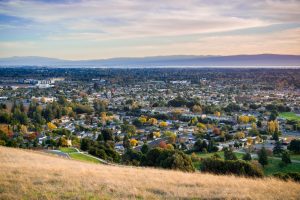
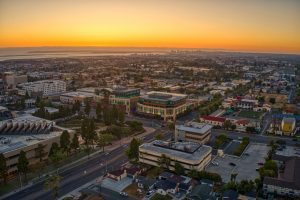
California produces roughly 80% of all wine made in the United States. Let that sink in for a second. This isn’t a state that dabbles in winemaking; it’s an empire. And with over 140 American Viticultural Areas scattered from the Mexican border to Mendocino County, the scale of what’s happening here is almost impossible to grasp until you start driving through it. This California wine country guide focuses on the most approachable places to start.
But here’s what most people get wrong: they think California wine country starts and ends with Napa Valley. It doesn’t. Napa is the headliner, sure, but there are regions up and down the state that produce wines just as good (sometimes better) at a fraction of the cost. I’ve been tasting my way through all of them for years, and the places I keep going back to aren’t always the ones with the biggest names on the gate. This California wine country guide is built for first-timers who want the real version, not the brochure version.
This guide covers the four most accessible wine regions for first-timers: Napa Valley, Sonoma County, Paso Robles, and Temecula Valley. Whether you’re planning a weekend trip from LA, a day trip from San Diego, or a full wine country vacation from scratch, this is what you actually need to know before you go. Think of it as a practical California wine country guide to the most popular California wine regions.
Napa Valley: The Big Name
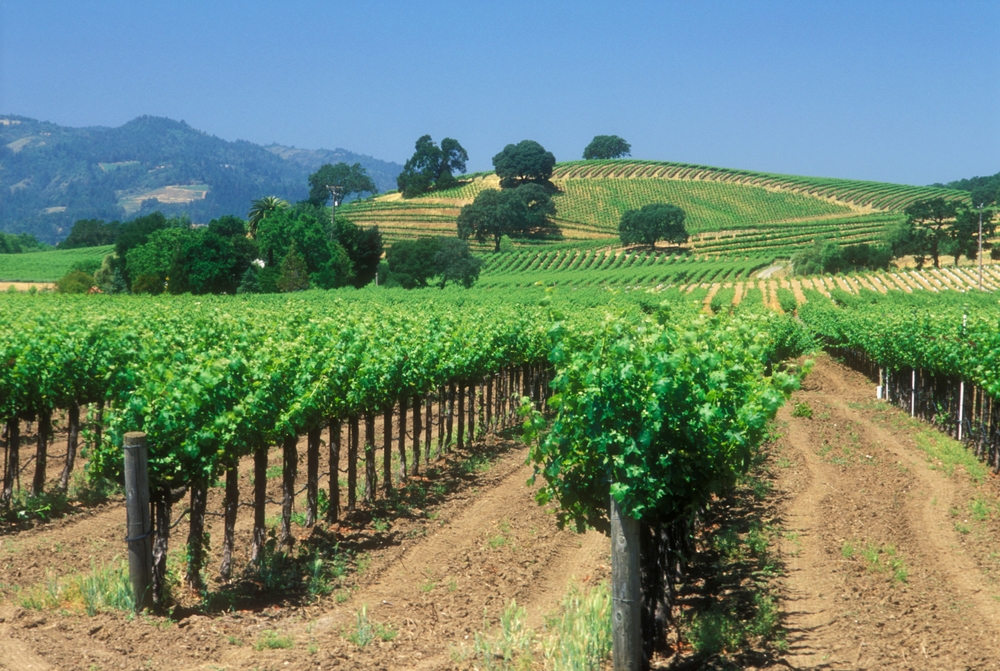
Napa is the one everyone’s heard of, and for good reason. The valley is only about 30 miles long, but it packs in over 400 wineries between the Mayacamas and Vaca mountain ranges. This is the region that put California on the global wine map back in 1976, when two Napa wines beat out France’s best in the famous Judgment of Paris blind tasting. The valley has been riding that wave ever since. If you’re coming for Napa Valley wine tasting, set expectations early: it’s famous, polished, and priced accordingly.
Cabernet Sauvignon is king here. You’ll also find excellent Chardonnay, Merlot, and Sauvignon Blanc, but Cab is what built Napa’s reputation, and it’s what most estates hang their hat on. The growing conditions (warm days, cool nights, volcanic soils on the hillsides, alluvial gravel on the valley floor) are borderline perfect for it.
The vibe is polished. Tasting rooms feel curated, seated experiences run 60 to 90 minutes, and the restaurants read like a Michelin guide. The towns along Highway 29 each have their own personality: Napa city has the Oxbow Public Market and a revitalized downtown. Yountville is Thomas Keller territory and the foodie capital. St. Helena has a charming Main Street with tasting rooms you can walk between. Calistoga, at the north end, has hot springs and a more laid-back feel.
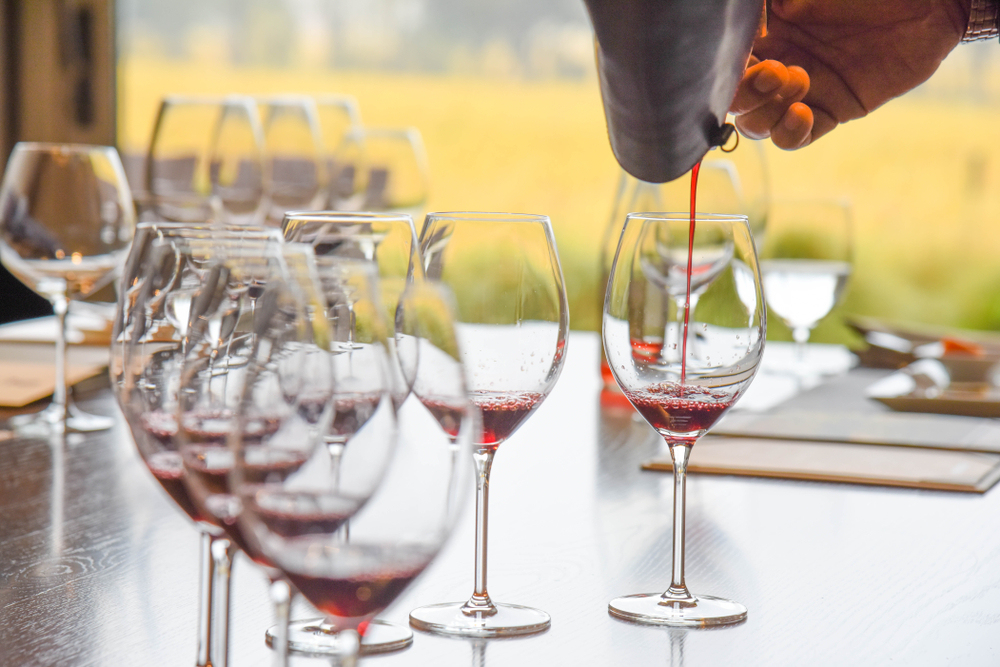
Now let’s talk about the part nobody puts in the brochure: cost. Standard tastings in Napa now run $50 to $125 per person. Reserve experiences and private tastings can hit $150 to $300. If you’re visiting three wineries in a day as a couple, you’re looking at $300 to $750 in tasting fees alone before you’ve eaten lunch or bought a single bottle.
That doesn’t mean it’s impossible to do Napa on a budget. Beringer offers a “stroll with a glass” experience for $20. Rombauer sells wines by the glass instead of requiring a full tasting. The Priority Wine Pass gets you 2-for-1 deals at select wineries. And visiting midweek instead of Saturday can shave costs at some spots. But let’s be honest, if you’re watching your wallet, other regions on this list will stretch your dollar a lot further.
One thing that catches first-timers off guard: over 60% of Napa wineries now require reservations. The walk-in era is essentially over. Book two to four weeks ahead for weekends, and plan on three wineries maximum per day. Any more than that and you’re rushing, and rushing through a tasting defeats the whole point.
Napa is an easy 90-minute drive north of San Francisco, which makes it a natural add-on if you’re already visiting the city. For many travelers, Napa Valley wine tasting is the classic “bucket list” entry in any California wine country guide.
Sonoma County: Napa’s More Relaxed Neighbor
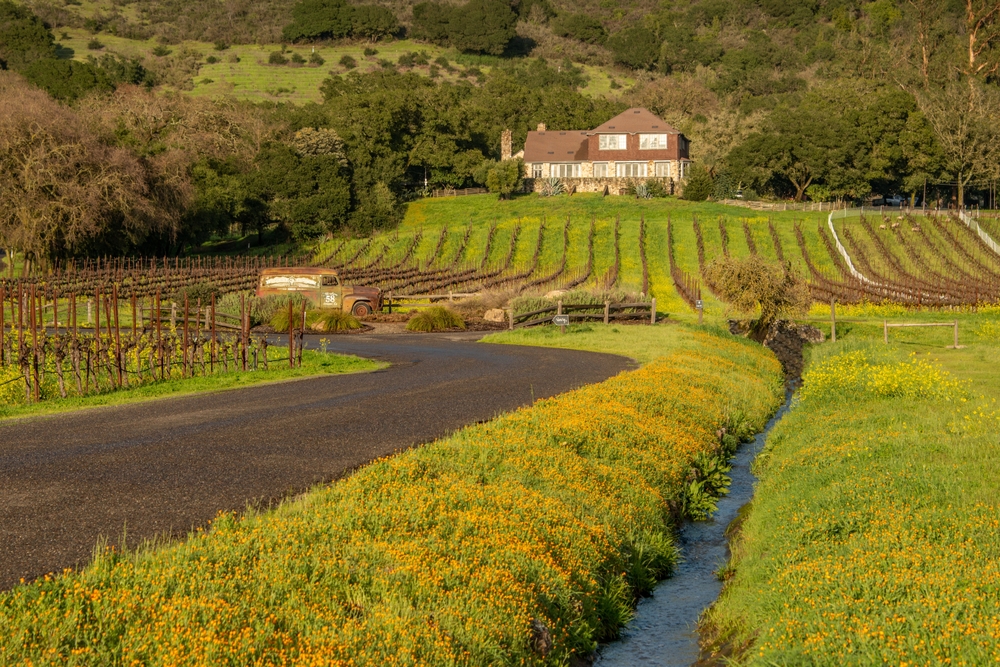
If Napa is the grand estate with the wrought-iron gate, Sonoma is the farmhouse next door with the screen door propped open. It’s twice the size of Napa, has 19 distinct AVAs, and produces a wider variety of wines, but at roughly half the attitude and two-thirds the cost. If you’ve heard people rave about Sonoma wine country, this is why.
The two regions are separated by the Mayacamas Mountains, and the difference is immediate when you cross over. Sonoma stretches all the way from the Pacific Coast to inland valleys, which gives it a climate diversity that Napa can’t match. Cool coastal fog shapes one end, warm inland sun shapes the other, and between them, you get everything from world-class Pinot Noir in the Russian River Valley to old-vine Zinfandel in Dry Creek Valley to sparkling wines that rival anything out of France.
The wineries here feel different. More family-run, more agricultural, more “the owner might be the one pouring your tasting.” Dogs are welcome at a lot of spots. Kids aren’t treated like a liability. And the whole experience is less performative; you’re there for the wine, not the Instagram moment.
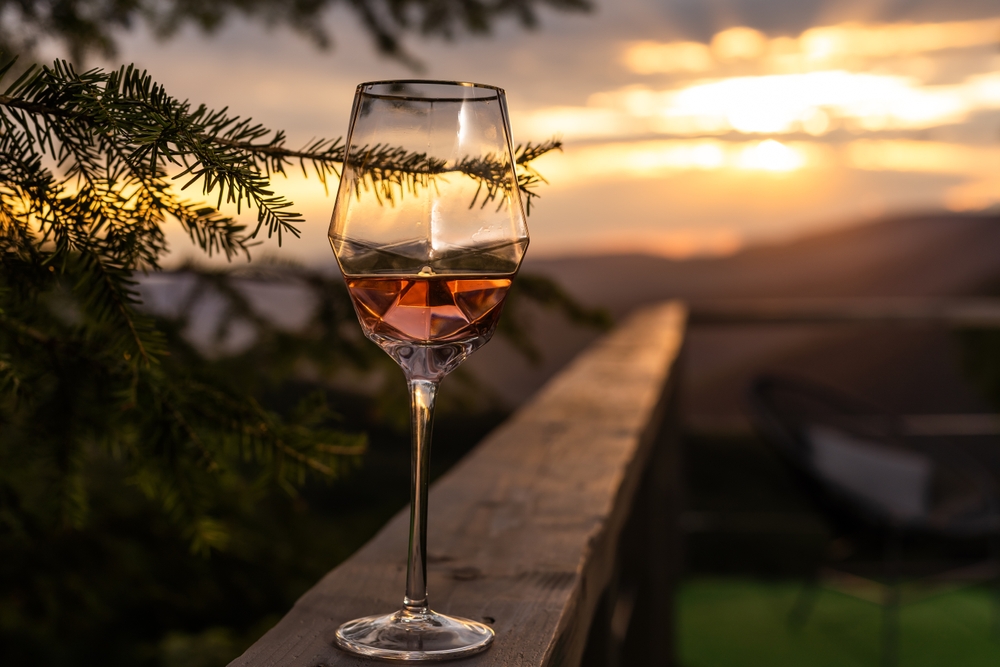
The key areas to know: Sonoma Plaza is the historic town center with walkable tasting rooms clustered around the square. Healdsburg has gotten more upscale in recent years but still feels approachable, with excellent restaurants and a beautiful downtown plaza. Russian River Valley is where the cool-climate Pinot Noir lives; if you like Pinot, this is your promised land. And Dry Creek Valley is Zinfandel country, with century-old vines and winemakers who’ve been doing this for generations.
Cost-wise, Sonoma is meaningfully cheaper than Napa. Standard tastings run $25 to $50 per person, and a number of wineries still waive the fee if you buy a bottle. Many places accept walk-ins, though reservations are recommended on weekends. If you’re a first-timer who’s intimidated by Napa’s price tags or the reservation formality, Sonoma is the better starting point.
It’s an easy day trip from Oakland and the East Bay, and close enough to San Francisco that you can combine the two in a long weekend without feeling rushed.
Paso Robles: The Wild West of Wine
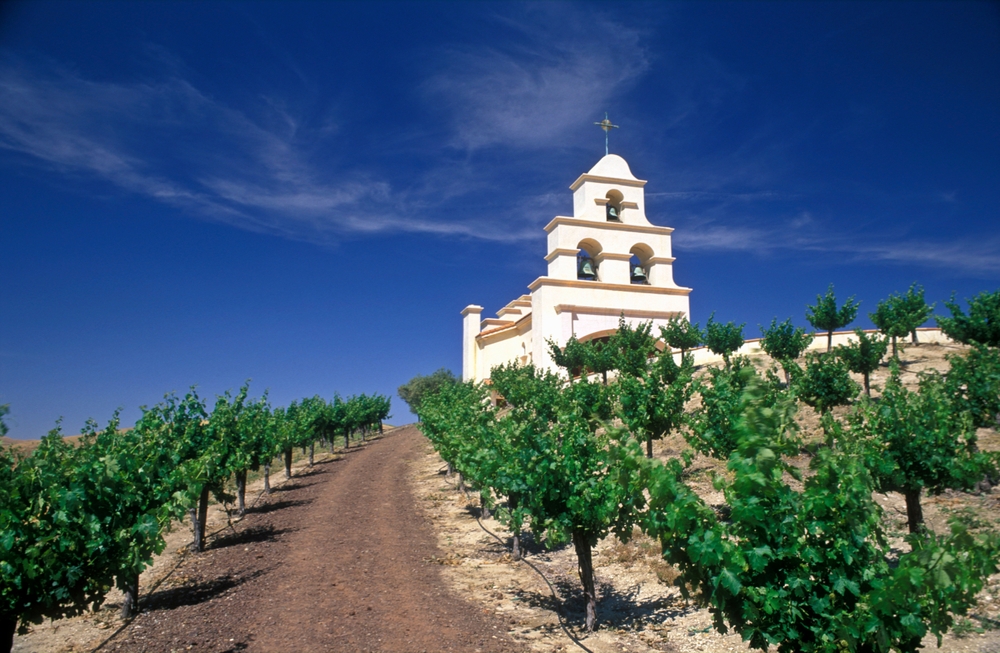
Paso Robles is the wine region I tell people about when they say California wine is too expensive or too pretentious. It’s neither. Halfway between LA and San Francisco on the 101, Paso sits on the Central Coast with over 200 tasting rooms, more than 60 grape varieties planted, and a cowboy-casual energy that feels nothing like Napa or Sonoma. If you’re mapping out Paso Robles wineries for your trip, you’ll quickly realize how much variety is packed into a small area.
This is Rhône country. Syrah, Grenache, Mouvrèdre (the classic GSM blend), along with bold Zinfandel and increasingly impressive Cabernet Sauvignon. The diversity here is unmatched anywhere in the state. The hot days and cool nights of the inland Central Coast, combined with a patchwork of limestone, clay, and granite soils, give winemakers an enormous palette to work with. You’ll taste wines at one estate that taste nothing like the wines at the place five minutes down the road. That’s not an accident; it’s terroir.
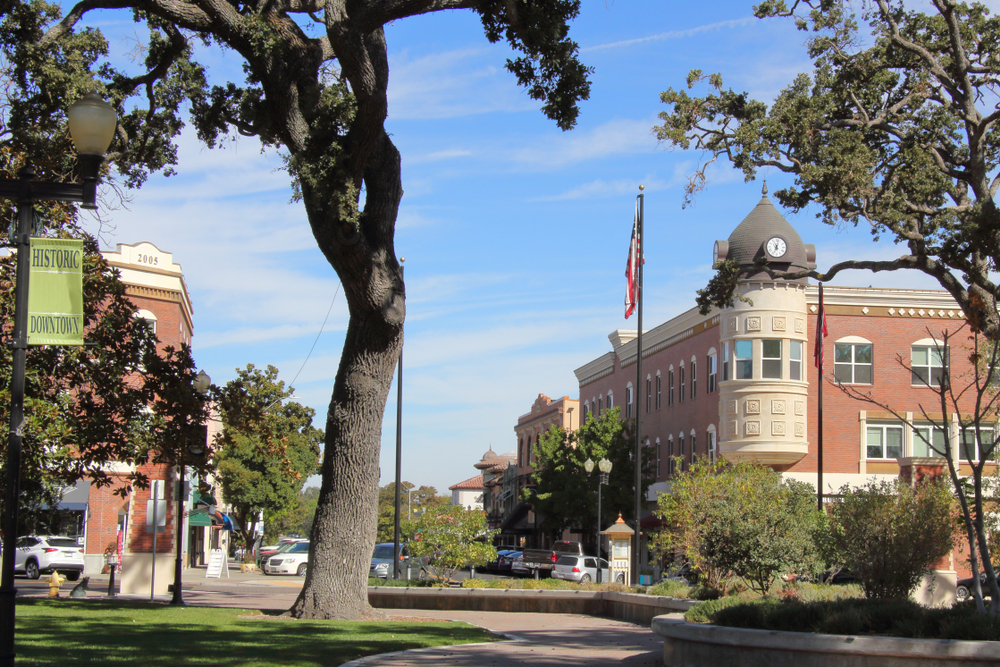
The town itself is built around a historic downtown square with 22 tasting rooms you can walk between without ever getting in a car. That alone makes it one of the most accessible wine experiences in the state. Beyond downtown, Highway 46 West is the classic winery corridor, and the Adelaida District up in the hills produces elegant, mountain-grown wines that serious collectors are paying attention to.
And the cost? This is where Paso really shines. Tastings run $15 to $40 per person; a fraction of Napa. Many wineries waive the fee with a bottle purchase. You can do a full day of tasting for what one reserve experience costs in Napa Valley.
Beyond the wine, there’s more happening here than you’d expect. Sensorio’s Field of Light, a massive art installation that lights up the rolling hills after dark, is worth the trip on its own. Hearst Castle is an hour away. Olive oil tastings, hot springs, and craft distilleries fill in the gaps. And if you pair it with a stop at nearby Pismo Beach, you’ve got yourself one of the best weekend trips in the state.
Paso Robles is trending for a reason. The natural wine movement has found a spiritual home here, Rhône wines are gaining popularity nationally, and it’s still affordable enough that you can buy land-priced-out winemakers’ best bottles for under $40. That won’t last forever. This California wine country guide includes Paso because it’s one of the most approachable California wine regions for first-timers.
Temecula Valley: SoCal’s Backyard Wine Country
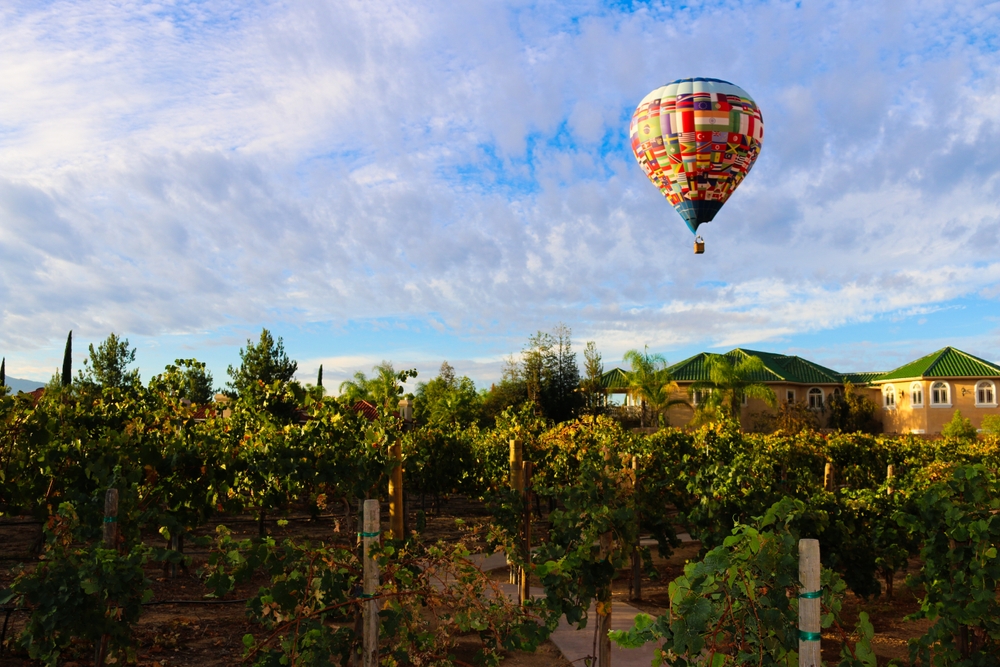
If you live anywhere in Southern California, Temecula is your wine country. It’s under an hour from San Diego, about an hour from Irvine and Orange County, and 30 minutes from Riverside. Nearly 50 wineries are packed into a compact area along Rancho California Road and De Portola Road, which means you can hit three or four in an afternoon without spending half your day driving between them. For an easy day out, Temecula wine tasting is hard to beat.
Temecula’s climate is warm Mediterranean with less than 10 inches of rain per year, which means sunny days are practically guaranteed. The grape varietals reflect that heat: Cabernet Sauvignon, Syrah, Sangiovese, Tempranillo, Grenache, and Petite Sirah all thrive here. Wilson Creek’s almond sparkling wine has become something of a cult favorite and is worth trying even if sparkling isn’t usually your thing.
The vibe is different from the other regions on this list, and that’s by design. Temecula leans into the “wine country experience” as much as the wine itself. Big destination wineries with full-service restaurants, live music on weekends, lawn games, outdoor patios overlooking the vines, and hot air balloon rides at sunrise have become one of the most Instagrammed things in Southern California. It’s social, it’s fun, and it’s a genuinely great time even if you’re not a serious wine person.
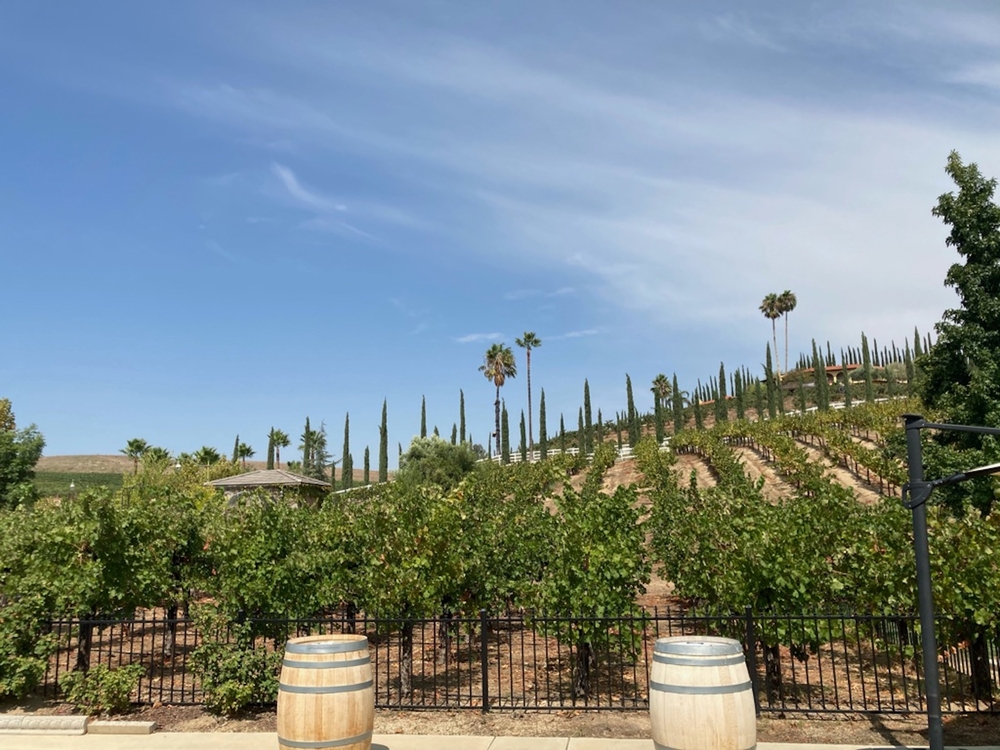
Tastings run $20 to $30 per person on weekdays, with some spots charging $5 to $10 more on Saturdays. The SIP Passport from the Temecula Valley Winegrowers Association is a solid deal: $75 gets you a standard tasting at five participating wineries, valid Monday through Friday for 90 days. If you’re planning a midweek visit, it’ll save you around $60 per person.
Some wineries to have on your radar: Peltzer Family Cellars was named the 2024 winery of the year and has food trucks most Wednesdays. Doffo pairs wine with a motorcycle collection. Robert Renzoni does Tuscan-style wines in a setting that makes you forget you’re in Riverside County. And Carter Estate specializes in méthode champenoise sparkling wine that’s legitimately impressive.
Pro tip: visit Wednesday through Friday. Smaller crowds, lower prices, midweek specials at restaurants, and no two-night minimum at most hotels. If you need a designated driver, Grapeline Wine Tours runs group tours with tastings, lunch, and transportation included.
Which Region Is Right for You?
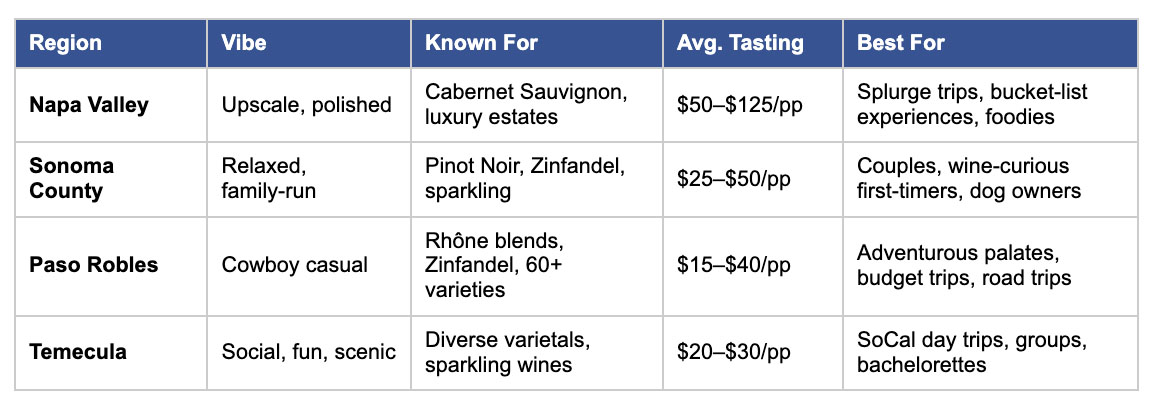
Not sure where to start? Here’s how the four regions compare at a glance.
8 Things I Wish Someone Had Told Me Before My First Wine Tasting
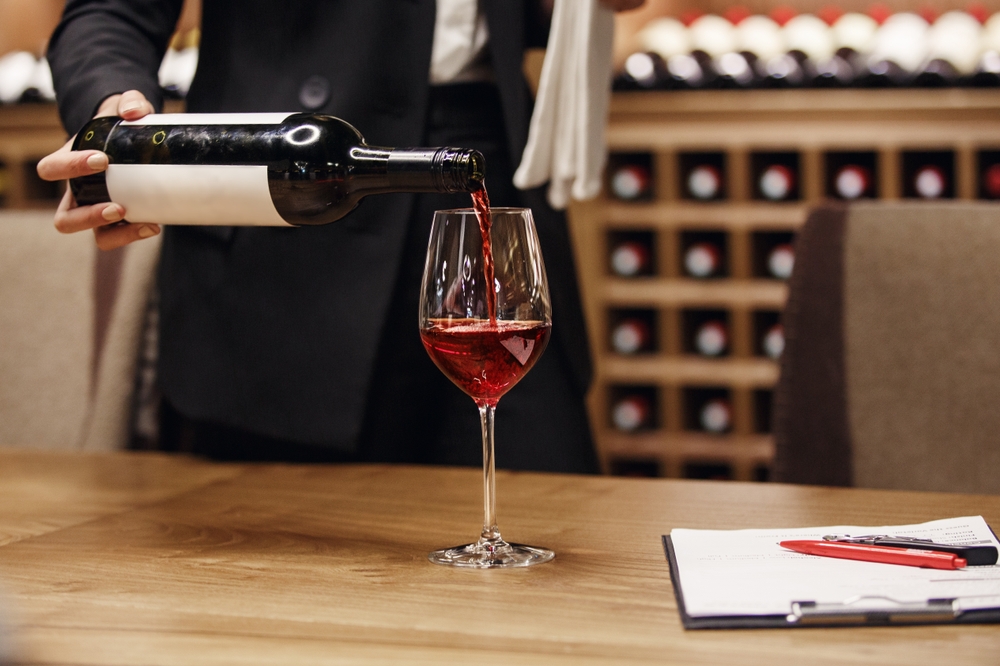
Make reservations. Even when it’s not technically required, it’s expected. In Napa, over 60% of wineries won’t see you without one. In Sonoma and Paso, you can sometimes walk in, but you’ll get a better experience (and a guaranteed seat) if you book ahead.
Budget for tasting fees up front. They add up faster than you think. A couple visiting three wineries in Napa can easily spend $300 to $750 in tasting fees alone. Paso and Temecula are much more forgiving, but even at $25 per person, a full day adds up.
Get a driver. DUI is not a souvenir. Uber and Lyft are unreliable in wine country; I’ve heard too many stories of people stranded on a hillside waiting for a ride that never came. Hire a driver for your rental car ($45–50/hour in Napa) or book a tour company like Grapeline, which operates in both Napa and Temecula.
Visit midweek if you can. Smaller crowds, better service, sometimes lower tasting fees, and no two-night minimums at hotels. Wednesday through Friday is the sweet spot.
Eat before and between tastings. Some wineries have food, many don’t. Pack snacks, plan a proper lunch stop between your second and third winery, and drink water like it’s your job. Wine tasting in the California sun plus dehydration is a combination that ruins afternoons.
Don’t feel pressured to buy. The tasting fee covers the experience. If you love something, absolutely buy it; many of these wines are only sold at the winery, and you won’t find them at your local shop. But nobody’s keeping score.
Dress in layers. Mornings are cool, afternoons are warm, and wine caves are cold. Comfortable shoes are non-negotiable. Leave the heels at the hotel.
It’s okay to spit. That’s what the dump bucket is for. Nobody will judge you. In fact, the people who work at wineries will respect you more for it. You’ll taste better on your third stop, and you’ll actually remember what you tried. These are wine tasting tips California visitors learn fast.
Start Somewhere
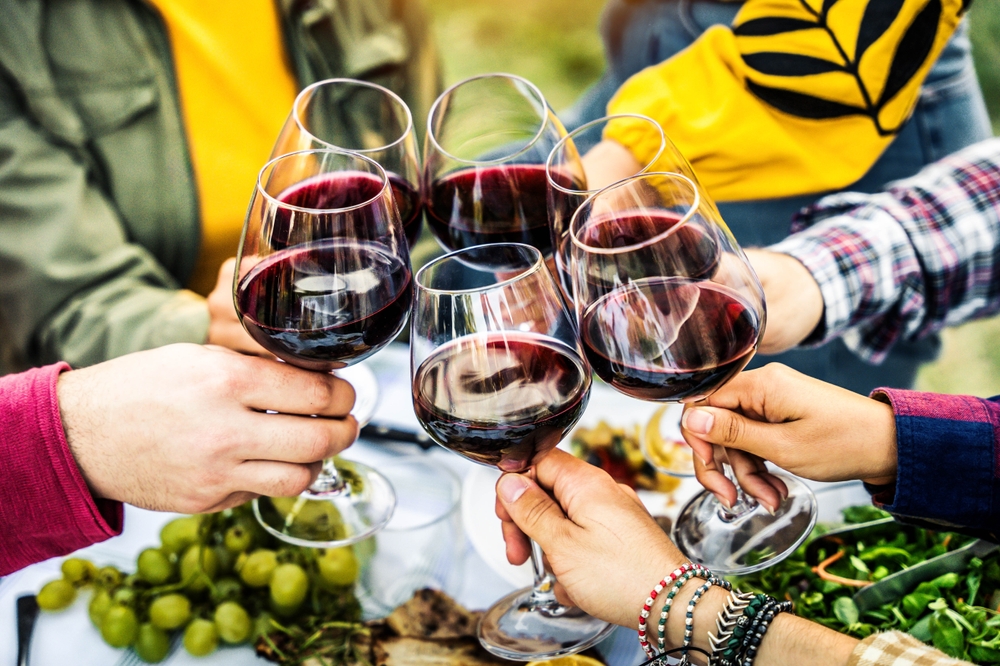
Here’s the thing about California wine country: you don’t have to know anything about wine to have an incredible time. You don’t need to swirl correctly, identify the tannins, or have an opinion about malolactic fermentation. You just need to show up, be curious, and let someone who’s passionate about what they make share it with you. This is the core idea behind this California wine country guide.
If you want the big, once-in-a-lifetime experience, go to Napa. If you want something more relaxed and wallet-friendly, start with Sonoma or Paso Robles. If you live in Southern California and want a great day out without a plane ticket, Temecula is right there waiting. These four stops are the easiest entry points into the broader map of California wine regions.
And the best part about living in this state? You don’t have to pick just one. They’re all within a few hours of each other, and they’re all waiting for you.
Planning a move to California? Check out our city guides to find the region that’s right for you. Wine country is just one of the reasons people fall in love with this place.
A Note on Tasting Fees & Hours
Tasting fees, hours, and reservation policies change frequently. We’ve verified the information in this guide as of February 2026, but we recommend checking directly with each winery before your visit. Most wineries list current pricing and booking options on their websites. Demand-based pricing is becoming more common, so expect weekend rates to be higher at some locations.
Official Visitor Resources: Visit Napa Valley (visitnapavalley.com) | Sonoma County Tourism (sonomacounty.com) | Paso Robles Wine Country Alliance (pasowine.com) | Visit Temecula Valley (visittemeculavalley.com)