Quick Facts
- •18% of California households could afford a median-priced home in Q4 2025, up from 16% a year earlier (C.A.R.)
- •The statewide median home price fell to $869,300, a 2.2% decline from the previous quarter
- •Mortgage rates dropped to 6.35% in Q4 2025, the lowest since Q3 2022
- •A household still needs $213,200 per year to afford the median-priced home in California
- •Lassen County is the most affordable (57% affordability); Mono County is the least (10%)
- •Nationally, 39% of households can afford the $414,900 median-priced home
California’s housing market gave buyers a small but measurable reason for optimism this month. The California Association of Realtors (C.A.R.) released its Fourth Quarter 2025 Housing Affordability Index, and the headline number tells a story of incremental progress: 18% of California households can now afford the median-priced existing single-family home, up from 16% in Q4 2024 and 17% in Q3 2025.
That two-percentage-point annual gain may look modest on paper. But in a state where housing affordability has hovered near record lows for the better part of a decade, any upward movement gets noticed. Lower mortgage rates, softening home prices, and rising incomes combined to push the needle. The question now is whether this improvement has legs heading into 2026, or whether it’s a brief window before the spring buying season pushes prices back up.
The Numbers Behind the Improvement
The C.A.R. Housing Affordability Index (HAI) measures the percentage of households that earn enough income to qualify for the purchase of a median-priced, existing single-family home. In Q4 2025, that median price was $869,300. To qualify, a buyer needed a minimum annual income of $213,200 to cover the $5,330 monthly payment (principal, interest, taxes, and insurance) on a 30-year fixed-rate mortgage at 6.35%.
Several factors drove the improvement from 16% to 18% over the past year.
Mortgage rates fell meaningfully. The average effective interest rate dropped to 6.35% in Q4 2025, down from 6.67% the previous quarter and 6.76% a year earlier. That 41-basis-point annual decline was the largest year-over-year rate improvement since 2023, largely driven by three Federal Reserve rate cuts in the second half of 2025 that brought the federal funds rate to 3.50%-3.75%.
Home prices softened. The statewide median price of an existing single-family home declined 2.2% from Q3 2025, marking the second consecutive quarter of price drops. While seasonal factors played a role, a shift in sales mix and cooling market competition contributed as well.
That stat underscores a reality that the headline number alone can obscure. An 18% affordability rate means 82% of California households still cannot afford the median-priced home. And a $213,200 income requirement remains far above the statewide median household income of roughly $100,600.
How California Compares to the Rest of the Country
Nationally, 39% of households could afford to purchase the $414,900 median-priced home in Q4 2025. That national figure edged up from 36% both a quarter earlier and a year ago. The national qualifying income is $101,600, with monthly payments of $2,540.
California’s 18% affordability rate is less than half the national figure. The gap reflects the state’s median home price being more than double the national median, while California incomes, though higher than national averages, don’t come close to closing that difference.
| Metric | California (Q4 2025) | National (Q4 2025) |
|---|---|---|
| Affordability Index | 18% | 39% |
| Median Home Price | $869,300 | $414,900 |
| Minimum Qualifying Income | $213,200 | $101,600 |
| Monthly Payment (PITI) | $5,330 | $2,540 |
| Mortgage Rate | 6.35% | 6.35% |
If you’re evaluating whether your income stretches further in California or elsewhere, our cost of living breakdown provides a detailed comparison of housing, groceries, utilities, and taxes across the state.
County-Level Data: A Tale of Two Californias
Statewide averages smooth over the enormous variation in affordability between inland and coastal California. The C.A.R. county-level data paints a sharper picture.
Most Affordable Counties
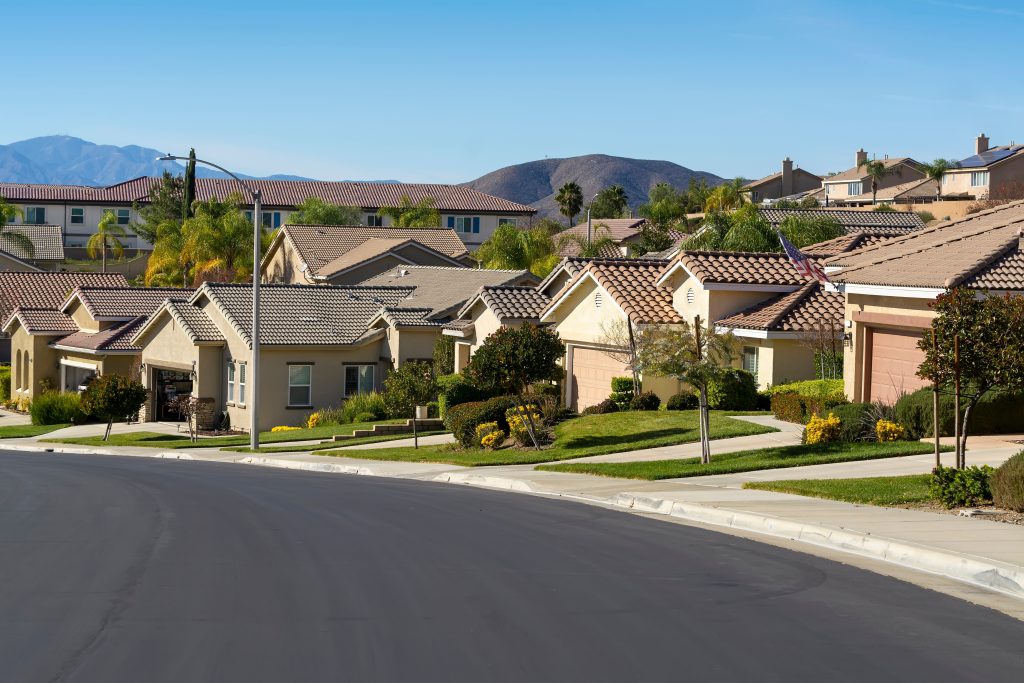
Lassen County remained the most affordable county in the state at 57% affordability, meaning well over half of local households can afford the median-priced home there. It also required the lowest minimum qualifying income at $56,000. Trinity County (44%) and Tuolumne County (43%) followed close behind.
These rural, inland counties offer price points that are a fraction of the coastal markets, though they come with tradeoffs in job access, commute times, and available services.
Least Affordable Counties
Mono County was the least affordable at 10% affordability, followed by Monterey and Santa Barbara, each at 12%. These counties all required a minimum income above $226,400.
San Mateo County remained the most expensive in terms of qualifying income, at $507,600. It was the only county in the state where a buyer needs more than half a million dollars in annual income to qualify for the median-priced home. Santa Clara ($470,800) and San Francisco ($441,200) rounded out the top three.
| County | Affordability % | Min. Qualifying Income |
|---|---|---|
| Lassen (Most Affordable) | 57% | $56,000 |
| Trinity | 44% | Varies |
| Tuolumne | 43% | Varies |
| Monterey (Least Affordable Tier) | 12% | $226,400+ |
| Santa Barbara | 12% | $226,400+ |
| Mono (Least Affordable) | 10% | $226,400+ |
| San Mateo (Highest Income Req.) | N/A | $507,600 |
| Santa Clara | N/A | $470,800 |
| San Francisco | N/A | $441,200 |
Quarter-Over-Quarter Trends
The good news is that the improvement was broad-based. A total of 47 counties posted affordability gains from Q3 to Q4 2025, while only three declined and three stayed flat. The biggest year-over-year gains came from Trinity County (+15 points), Humboldt (+8), and Glenn (+8). Lake County (-5) and Imperial County (-4) were the notable decliners.
Cheapest Places to Live in California (2026): Affordable Cities That Are Worth It
Looking for affordable markets in California? Our guide breaks down the most budget-friendly cities with livable home prices, lower rents, and solid quality of life.
Read the Full Guide →
Condos and Townhomes: A More Accessible Entry Point
The affordability picture improves when you look beyond single-family homes. Twenty-eight percent of California households could afford a typical condo or townhome in Q4 2025, up from 27% the previous quarter and 25% a year earlier.
The median condo/townhome price was $650,000, requiring an annual income of $159,200 and monthly payments of $3,980. That $54,000 income gap between qualifying for a condo versus a single-family home makes condos and townhomes the more realistic path for many first-time buyers.
What’s Driving the Shift: Mortgage Rates and the Fed
The single biggest factor in the affordability improvement was the decline in mortgage rates. After oscillating throughout the first half of 2025 due to tariff-related economic uncertainty, rates trended lower in the second half of the year as the Federal Reserve’s three rate cuts took effect.
The Fed brought the federal funds rate to 3.50%-3.75% by December 2025, cutting 25 basis points at each of its September, October, and December meetings. While the Fed held rates steady at its first meeting of 2026, markets are pricing in one to two additional cuts later this year.
As of mid-February 2026, Freddie Mac reports the average 30-year fixed-rate mortgage at 6.01%, down 84 basis points from a year ago. Major forecasters project rates will average between 6.0% and 6.14% through 2026, with the National Association of Realtors projecting a further dip to 5.9% in 2027.
C.A.R.’s own forecast calls for the average 30-year fixed rate to moderate to 6.0% in 2026, which would support continued modest improvements in affordability if home prices hold steady or decline further.
The Historical Context: Still Near Record Lows
While 18% marks an improvement, it is important to keep it in perspective. California’s housing affordability peaked at 56% in Q4 2012, when the median home price was far lower and mortgage rates sat near historic lows following the Great Recession. Today’s 18% is less than a third of that peak.
The income required to buy a median-priced home has exceeded $200,000 for 12 of the past 13 quarters. That sustained stretch of sky-high qualifying incomes has pushed homeownership further from reach for the average California household, where median income sits around $100,600 per year.
For buyers weighing whether California homeownership fits their financial picture, understanding the full spectrum of costs beyond the mortgage payment is critical. Property taxes, insurance (which has spiked in fire-prone areas), HOA fees, and Mello-Roos assessments all add to the monthly burden. Our guide to Mello-Roos breaks down how this California-specific tax works and how it affects your total housing costs.
Cost of Living in California Breakdown (2025): What You’ll Actually Spend
Housing is the biggest line item, but it’s not the only one. Our full breakdown covers groceries, utilities, taxes, insurance, and how costs vary by region across the state.
Read the Full Breakdown →
What This Means for Buyers in 2026
The affordability improvement is real, but it comes with caveats. Here’s how buyers should think about the current window.
Mortgage rates are likely near their near-term floor. Most forecasters expect rates to hover in the low 6% range through 2026. The pandemic-era rates of 3% to 4% are not returning. If rates dip below 6%, that would likely signal a recession, which brings its own set of risks for buyers.
Home prices may rebound. The Q4 price softening is partly seasonal. Analysts expect prices to remain soft through early 2026 but rebound as the spring buying season picks up in late March and April. If you’re in a position to buy, the winter months have historically offered less competition and slightly better pricing.

Inland markets offer significantly more value. The gap between Lassen County (57% affordability, $56,000 qualifying income) and San Mateo County ($507,600 qualifying income) is enormous. Buyers priced out of coastal markets may find workable options in the Central Valley, the Sierra foothills, or Northern California, especially if remote or hybrid work arrangements are an option.
Condos and townhomes remain the more practical entry point. At 28% affordability versus 18% for single-family homes, the condo market gives a larger share of households a realistic shot at ownership. First-time buyers in particular should consider this path, keeping in mind the appraisal process and how it can affect your purchase timeline.
Looking Ahead: Will the Trend Continue?
C.A.R.’s 2026 California Housing Market Forecast projects the statewide median home price will reach $905,000, a new record. If that forecast holds, any further affordability gains will depend heavily on whether mortgage rates continue to decline and whether incomes keep pace.
The organization projects affordability will reach 18% for 2025 overall (which the Q4 data confirmed) and edge slightly higher in 2026 if rates fall to around 6.0% as expected.
California’s housing affordability problem was built over decades of underbuilding, restrictive zoning, high construction costs, and strong demand from both domestic and international buyers. A two-point improvement in the affordability index is progress, but it does not signal a structural shift. The state’s housing deficit remains deep, and the income required to buy a home still excludes the vast majority of residents.
For buyers, the takeaway is practical: conditions have improved at the margin, and the current window offers slightly better terms than what we saw in 2023 and 2024. Whether that window stays open depends on forces largely outside any individual buyer’s control, from Federal Reserve policy to global trade dynamics to the pace of new housing construction in the state.